

































OpenAI's Navier Stokes Breakthrough Sparked a Bitter Credit Fight
OpenAI says roughly 10,000 coordinating AI agents worked 88 hours to produce a proof that 3D fluid flow can develop a singularity in finite time, resolving a Millennium Prize problem — but the announcement landed hours after rival mathematicians published related work, triggering a public dispute over credit and access.
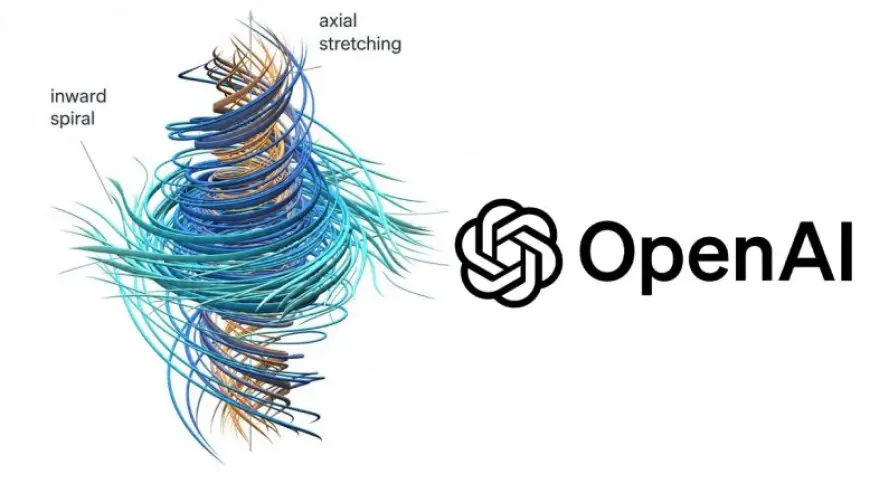
One of mathematics' longest-standing open questions may have just fallen to a swarm of AI agents — and the announcement immediately turned into a fight. OpenAI published a 165-page paper claiming finite-time blowup for the Navier-Stokes equations, produced by roughly 10,000 concurrent agents running an unreleased internal model for 88 hours.


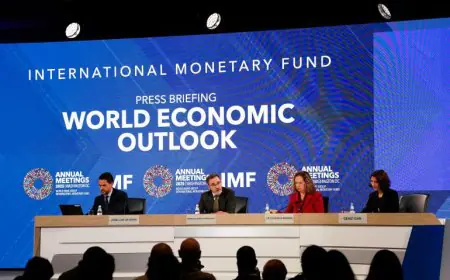
The catch: it arrived roughly 12 hours after NYU's Tristan Buckmaster announced closely related results with Anthropic researcher Levent Alpöge.
The overlap is what turned a technical result into a public dispute. Both efforts built on the same foundation — prior work by mathematicians Diego Córdoba and Luis Martínez-Zoroa — but the sequence of events raised questions Buckmaster made public. Key points of contention include:
- OpenAI concedes its effort began September 1, after rumors circulated that two Millennium Prize problems had been solved
- Buckmaster says he used private Codex sessions during his work, and questions whether that material informed OpenAI's approach; OpenAI denies inspecting private user data
- Buckmaster alleges OpenAI's Sébastien Bubeck proposed a publication arrangement excluding Alpöge over his Anthropic affiliation — a claim OpenAI has not confirmed
Two caveats matter enormously here. First, the proof itself remains unverified — no independent mathematician has confirmed it, and formal recognition from the Clay Mathematics Institute would take years.
OpenAI has said it does not intend to claim the $1 million prize regardless. Second, the two results aren't identical: OpenAI's covers forced Navier-Stokes, while Buckmaster and Alpöge's concerned forced Euler.
Fields Medalist Terence Tao has meanwhile warned that indiscriminate automated proof-generation risks producing results nobody actually understands — a concern that may outlast whoever wins this particular argument.