





























Apple is Building Its Own AI Server Chips to Achieve Total Silicon Sovereignty
Apple is reportedly set to begin mass production of its own dedicated AI server chips, codenamed "Baltra," in the second half of 2026. This move follows a temporary partnership with Google and aims to power a massive expansion of Apple’s Private Cloud Compute infrastructure by 2027, reducing reliance on third-party silicon and reinforcing the company's privacy-first AI strategy.


Apple’s Strategic Leap Into the Data Center
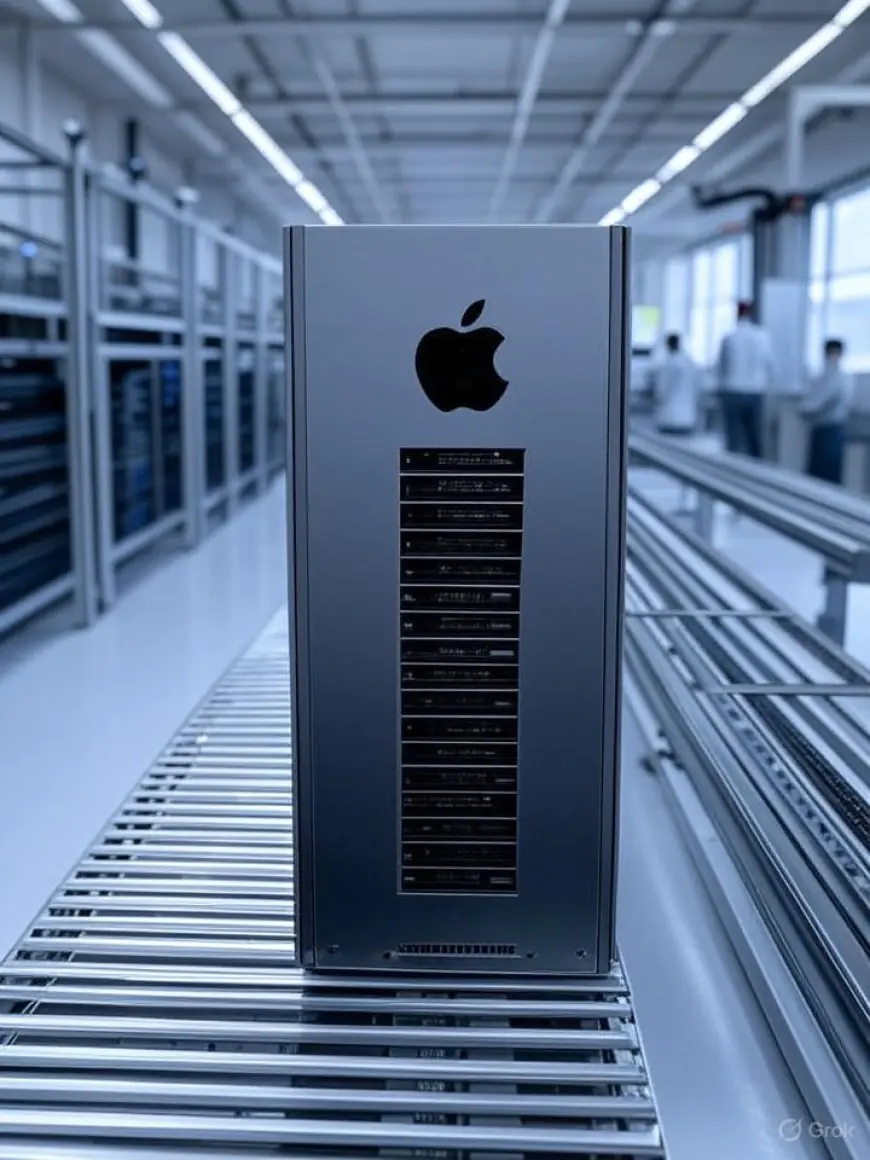
For years, Apple’s silicon dominance was confined to the devices in our pockets and on our laps. However, as of early 2026, the tech giant is reportedly preparing to take that expertise into the cloud. New reports from industry analyst Ming-Chi Kuo suggest that Apple will begin mass-producing its own in-house AI server chips in the second half of 2026. This project, frequently referred to by the codename "Baltra," marks a pivotal shift toward total vertical integration, allowing Apple to own the entire AI stack from the transistor to the user interface.
The move comes at a critical time. While Apple recently announced a multi-year partnership to use Google’s Gemini models for advanced Siri features, insiders view this as a strategic "stopgap." By developing its own server-grade silicon, Apple is positioning itself to handle the massive computational demands of "Apple Intelligence" without being beholden to the pricing or supply constraints of external providers like Nvidia or Google.
Meet Baltra: The Chip Designed for Private Cloud Compute
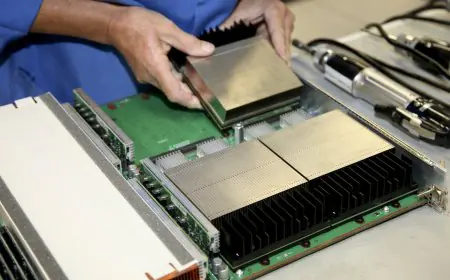
Unlike the M-series chips found in MacBooks, the upcoming Baltra processors are being designed specifically for AI inference in a server environment. These chips are expected to utilize TSMC’s advanced 3nm (and eventually 2nm) process and may feature specialized "chiplet" designs developed in collaboration with Broadcom. The primary goal is to power Private Cloud Compute (PCC), Apple’s secure server system that processes complex AI requests that are too heavy for on-device hardware.
According to MacRumors, this silicon sovereignty is essential for Apple’s brand promise of privacy. By using its own chips, Apple can implement "Secure Enclave" technologies at the server level, ensuring that user data is mathematically isolated and invisible even to Apple itself. This differentiates Apple from many cloud-first competitors who rely on more generalized, less private infrastructure.
2027: The Year of the Apple Data Center
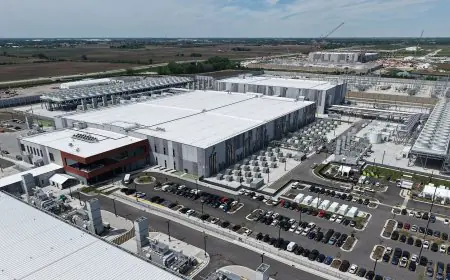
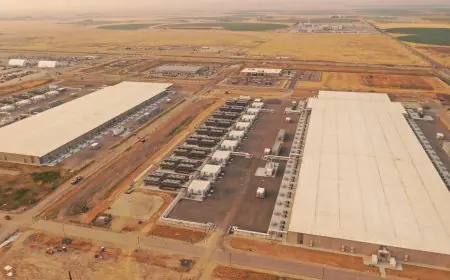
The hardware is only one half of the equation. To house these new Baltra chips, Apple is reportedly planning to significantly expand its physical data center footprint. Construction on specialized AI-first data centers is expected to begin in 2027. While Apple currently operates major facilities in North Carolina, Arizona, and Oregon, these new sites will likely be optimized for the high power and cooling requirements of dense AI clusters.
This timeline aligns with Apple's recent $500 billion investment plan in U.S. manufacturing, which includes a newly operational server production facility in Houston, Texas. As noted by AppleInsider, the Houston plant has already begun shipping American-made servers, but the 2026 mass production of dedicated AI silicon will represent the true "coming of age" for Apple’s cloud ambitions.
Overcoming the "AI Lag" Narrative
Critics have often pointed to Apple’s late entry into the generative AI race as a sign of weakness. However, the development of in-house server chips suggests a "slow and steady" approach designed for long-term dominance. By leveraging the same engineering team that created the world-beating A-series and M-series chips, Apple hopes to deliver server performance that is twice as power-efficient as traditional x86 alternatives.
The transition to custom server silicon also offers a massive financial incentive. As AI workloads scale to hundreds of millions of users, the cost of renting GPU capacity from AWS or Google Cloud would become astronomical. Building its own infrastructure allows Apple to maintain its high services margins while delivering more "agentic" and personalized AI features that require constant cloud-to-device communication.
The Future of On-Device and Hybrid AI
As we look toward late 2026 and 2027, the line between "local" and "cloud" AI will continue to blur. With the M5 chip already pushing the limits of on-device processing in the latest MacBook Pro and iPad Pro models, the addition of Baltra-powered servers creates a seamless "hybrid" ecosystem. Tasks will be intelligently routed: simple requests stay on your iPhone, while complex reasoning scales to an Apple-owned server running Apple-designed silicon.
If successful, this move could fundamentally change the competitive landscape. While other companies are fighting for a limited supply of third-party GPUs, Apple will be building its own future. For the consumer, this means a Siri that is faster, smarter, and—most importantly—entirely private, powered by the most sophisticated silicon network ever built by a single company.