






























YouTube Is Launching New Tools To Fight AI Political Impersonation
In a high-stakes move to protect election integrity, YouTube has unveiled a sophisticated AI detection suite designed to identify and flag deepfake videos of political figures, ensuring voters can distinguish between reality and synthetic deception.



As we navigate the complex digital landscape of 2026, the line between reality and synthetic media has never been thinner. With major elections looming globally, the threat of AI-generated misinformation has moved from a theoretical concern to a daily reality. In response, YouTube has officially stepped up its defense strategy by launching a specialized toolkit designed to detect and mitigate the impact of AI deepfakes specifically targeting political figures. This isn't just a minor update to the community guidelines; it is a fundamental shift in how the world’s largest video platform handles the authenticity of its content.
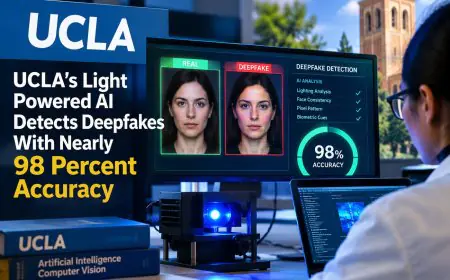
The core of this initiative is a new proprietary detection engine that scans uploaded content for the subtle digital signatures left behind by generative AI. While previous filters looked for obvious metadata, this new system analyzes facial micro-movements, vocal resonance, and lighting inconsistencies that are often invisible to the human eye. By focusing on the "likeness" of politicians, YouTube aims to stop malicious actors from putting words into the mouths of world leaders before those videos can go viral and influence public opinion.
The Mechanics of Real Time Detection
One of the standout features of this rollout is the real-time creator alert system. When a user attempts to upload content that the AI identifies as a high-fidelity impersonation of a public official, the platform triggers an immediate "Suspicious Content" warning. Creators are then prompted to provide evidence of consent or clearly label the video as synthetic or parodic. If the system detects a deliberate attempt to deceive voters during an active election cycle, the content is sequestered for human review before it ever hits a single subscriber’s feed.
This proactive stance is a direct answer to the "liar’s dividend"—a phenomenon where real footage is dismissed as fake, or fake footage is accepted as real, leading to total institutional distrust. By providing a clear "verified" or "synthetic" label, YouTube is attempting to restore a baseline of truth to political discourse. According to recent insights from YouTube’s official blog, the platform has already seen a significant drop in successfully uploaded "stealth deepfakes" during its initial beta testing phase.
Safeguarding the Global Ballot Box
The timing of this launch is no coincidence. With technological competition at an all-time high, foreign and domestic actors have increasingly turned to "cheapfakes" and deepfakes to sow discord. YouTube’s new protections specifically target the "last mile" of election manipulation—the 48 hours before a vote—when a single convincing fake video could sway undecided voters without leaving enough time for traditional fact-checkers to debunk it.
Industry experts at Reuters have noted that this move puts significant pressure on other social media giants to follow suit. While platforms like X and Meta have implemented various labeling policies, YouTube’s integration of deep-level AI scanning represents a more aggressive, technical approach to the problem. The goal is to make the cost of creating a convincing, undetected political deepfake so high that it becomes an unviable strategy for most disinformation campaigns.
Balancing Transparency and Creative Expression
Of course, this move isn't without its critics. Satirists and political commentators have expressed concern that these tools might inadvertently flag legitimate parody or late-night comedy sketches. To combat this, YouTube has refined its algorithms to distinguish between "malicious impersonation" and "transformative content." The "Pro" version of the tool allows verified news organizations and political campaigns to "whitelist" their official footage, creating a cryptographic trail that ensures their genuine messages aren't accidentally caught in the AI dragnet.
As we move deeper into the 2026 election cycles, the success of these tools will be measured not just by how many videos are removed, but by how much public confidence is restored. YouTube is signaling that it no longer views itself as a neutral host, but as a proactive curator of digital integrity. In an era where seeing is no longer believing, the platform's new AI detection suite might be the most important piece of infrastructure in the fight for a well-informed electorate.
The message to creators and viewers alike is clear: the era of the undetected deepfake is coming to a close. Whether these tools can keep pace with the rapidly evolving generative models remains to be seen, but for now, YouTube has drawn a firm line in the sand in the battle for digital truth.