




































Why OpenAI and Anthropic Warn About Risks While Accelerating Development
Leading AI labs continue to release increasingly capable systems while publicly warning that regulation is struggling to keep pace. The apparent contradiction has reignited debate over whether self-governance can keep frontier AI safe.

The Anchor Why Self-Governance Is Failing
The central issue is that safety is a commons problem, not a competitive advantage. A company that invests heavily in safety cannot easily monetize that investment. Customers choose models based on capability and price, not on safety margins. Investors reward growth, not caution. The result is a system where the responsible path is also the unprofitable path, at least in the short term.
The UK AI Safety Institute's framework for frontier AI governance (anchor link) explicitly calls for mandatory safety assessments before deployment, not voluntary ones. The framework argues that self-governance has failed because the economic incentives are misaligned. Whether regulators will listen—and act—remains the central question of 2026 for AI policy.
Critics Are Running Out of Patience
Not everyone is willing to accept the industry's framing. Civil society groups and some academics argue that the warnings are performative—designed to shape regulation in favorable ways while doing little to slow actual development. "They warn about extinction risks while racing to build the very systems that pose those risks," said one AI ethicist quoted in a Wall Street Journal investigation into the safety paradox. "At some point, you have to ask whether the warnings are genuine or just a PR strategy."
Industry leaders reject that characterization. They point to significant internal safety investments: red-teaming budgets, alignment research teams, and voluntary commitments like the White House's AI safety pledge. But they also admit that no company can solve the race dynamics alone. The only real solution, they argue, is binding international regulation with teeth—the same regulation they are simultaneously warning is "struggling to keep pace."
Where Do We Go From Here
The contradiction is not going away. As models become more powerful, the gap between warnings and actions will likely widen unless something fundamental changes. That could be a major accident that shocks the industry into coordination. It could be binding regulation from the EU, US, or China. Or it could be a slow erosion of trust that leads customers and policymakers to impose their own restrictions.
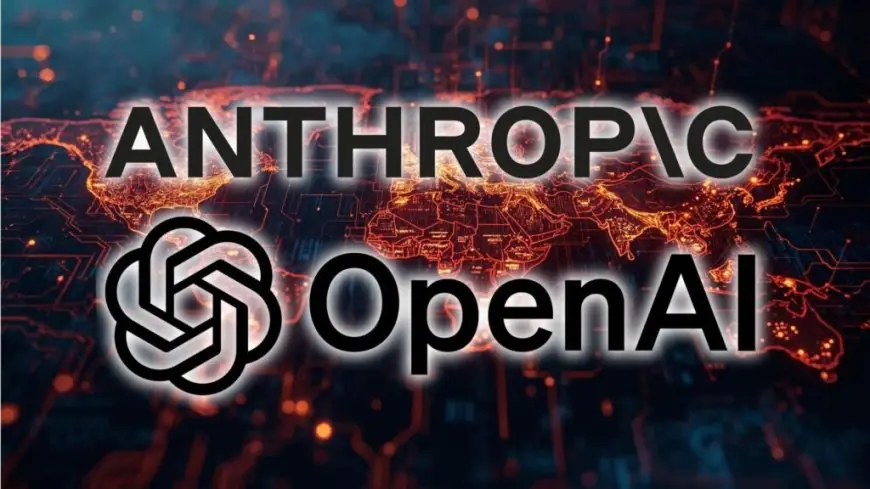
For now, the message from OpenAI and Anthropic is a paradox wrapped in a warning: AI is dangerous, and we are building it faster than ever. Whether that is reassuring or terrifying depends entirely on how much you trust the people in charge. And trust, unlike model parameters, cannot be optimized through gradient descent.