
















AI vs. The Storm: How Next-Gen Climate Prediction Tools Are Saving Lives in 2026
Artificial intelligence is fundamentally transforming meteorology, providing unprecedented lead times for cyclones and floods. As global initiatives like "Early Warnings for All" gain momentum, we explore how AI-driven tools from Nvidia and Google are rewriting the rules of disaster preparedness.

The Dawn of Proactive Climate Resilience
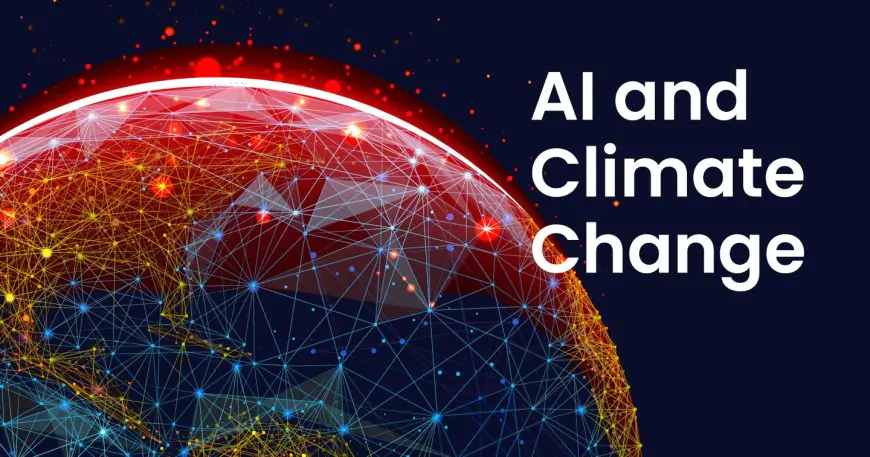
For decades, weather forecasting was a battle of attrition between supercomputers and the chaotic laws of physics. Meteorologists relied on numerical weather prediction (NWP) models that were as computationally expensive as they were slow. However, as we move into 2026, a quiet revolution has reached the front lines of climate science. Artificial intelligence is no longer just a buzzword in tech circles; it has become the primary shield against the increasingly volatile behavior of our planet’s atmosphere.
The shift from traditional physics-based modeling to AI-driven "deep learning" meteorology has unlocked capabilities that were previously thought to be years away. Today, AI systems are providing early warnings for cyclones and extreme heat events with a precision that allows communities to move from a reactive "cleanup" mindset to a proactive "evacuation" strategy. In a world where 24 hours of notice can reduce storm damage by up to 30%, these tools aren't just technical upgrades—they are life-saving infrastructure.
The Titans of Prediction: GraphCast and Earth-2
Leading the charge are a handful of sophisticated models that have redefined the global standard for accuracy. Google DeepMind’s GraphCast has gained significant attention for its ability to produce 10-day forecasts in under a minute, often outperforming the world’s best traditional systems in predicting hurricane tracks. By training on decades of historical weather data, the AI has "learned" the patterns of atmospheric movement without needing to calculate every individual physical interaction from scratch.
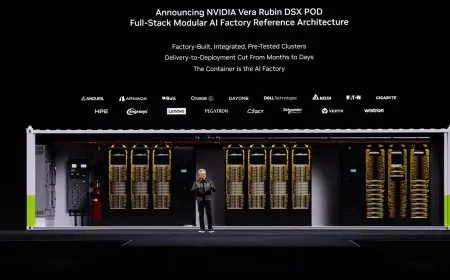
Parallel to this, Nvidia’s Earth-2 platform is acting as a "digital twin" of the planet. This cloud-based system allows scientists to simulate climate scenarios with incredible resolution. Nvidia’s generative AI model, CorrDiff, can turn coarse global data into kilometer-scale local guidance, making it 1,000 times faster and 3,000 times more energy-efficient than previous methods. You can explore the technical milestones of these systems on the World Meteorological Organization (WMO) newsroom, which has been tracking the integration of AI into global weather networks throughout 2025.
"Early Warnings for All": A Global Mandate
The real-world impact of these tools is most visible in the "Early Warnings for All" initiative, a UN-backed effort to ensure every person on Earth is protected by life-saving warning systems. AI has been the "X-factor" in making this goal achievable for developing nations. In countries like Nigeria, Malawi, and Vietnam, AI pilot projects have successfully detected early signals of flood and cyclone activity that traditional models missed.
The statistics are difficult to ignore. Recent reports indicate that disaster-related mortality is at least six times lower in regions supported by high-quality AI early-warning systems. These models are now achieving a precision rate of over 95%, reducing "false alarms" by nearly 10% and extending lead times by up to 48 hours. This extra window of time is the difference between a farmer saving their livestock or losing their entire livelihood to a flash flood.
The Road Ahead: Bridging the Digital Divide
Despite the rapid deployment of these tools, the industry faces a critical challenge: the digital divide. While AI models require less compute power to run than traditional simulations, they require massive amounts of data to train. Vulnerable regions often lack the local sensor density needed to feed these hungry algorithms. However, the emergence of "virtual gauges"—AI systems that can infer local conditions from satellite imagery alone—is helping to close these coverage gaps.
As we look toward the remainder of 2026, the focus is shifting toward "Nowcasting," which provides hyper-local predictions for the next zero to six hours. This is essential for managing the sudden, high-impact events like "medicane" storms or extreme rainfall that can trigger urban flash flooding in minutes. For those interested in the broader intersection of technology and planetary health, UN Climate Change (UNFCCC) continues to provide updates on how AI is being leveraged for international adaptation goals.
Conclusion
The era of being blindsided by the weather is ending. Artificial intelligence has provided us with a "high-definition" view of the future, allowing us to see the storm before it even forms. As AI climate prediction tools become standard equipment for national meteorological services, the focus must remain on ensuring that the most vulnerable populations are the first to benefit from this technological grace period.