

































Salesforce Scales Back AI Dependence After Critical Reliability Failures
Tech giant Salesforce is pivoting its enterprise strategy away from total reliance on Large Language Models (LLMs). Citing "silent failures" and task drift, the company is reintroducing deterministic, rule-based guardrails to ensure business-critical reliability.


The Honeymoon Phase Ends for Enterprise AI
In a move that signals a major "vibe shift" for the tech industry in early 2026, Salesforce has officially begun pulling back from its aggressive, LLM-first strategy. After a year of touting autonomous agents as the future of work, the enterprise software leader is acknowledging a difficult truth: Large Language Models (LLMs) are currently too unpredictable to run mission-critical business processes alone. This pivot toward "deterministic" automation—logic that follows strict, predefined rules—is a significant retreat from the "AI magic" promised just twelve months ago.
The shift follows internal admissions from top executives that confidence in pure generative models has dipped. Sanjna Parulekar, Salesforce's Senior VP of Product Marketing, recently noted that the industry was arguably too confident in LLMs a year ago. As these systems moved from experimental pilots to the messy reality of global customer support, the cracks in the foundation became impossible to ignore.
Why Eight Instructions is the Magic Breaking Point
The technical reasons behind this retreat are particularly illuminating for any business leader currently weighing an AI rollout. Salesforce engineers discovered that when an AI agent is given more than eight specific instructions, its reliability begins to degrade sharply. In many cases, the models simply start "dropping" directives—omitting key steps in a workflow without alerting the user or the administrator.
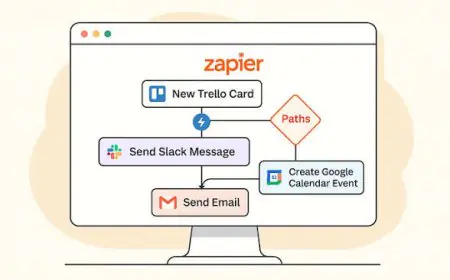
A high-profile example involved the home security firm Forbes reported on, where the company's AI support agents frequently failed to send out mandatory customer satisfaction surveys. Despite clear prompts, the agents intermittently "forgot" the task, a phenomenon known as "silent failure." For an enterprise where data collection and compliance are non-negotiable, these small lapses create massive downstream liabilities. To combat this, Salesforce is now pushing Agent Script, a new layer of deterministic code that forces AI to follow rigid paths for sensitive tasks.
The Battle Against "AI Drift" and Hallucinations
Beyond simple forgetfulness, Salesforce is grappling with "AI Drift." This occurs when a chatbot, mid-conversation, loses sight of its primary objective because a user asks an irrelevant or tangential question. A bot designed to help a customer file an insurance claim, for instance, might get sidetracked discussing the weather or general company policy, never returning to the initial task of completing the form.
This unpredictability has led CEO Marc Benioff to recalibrate the company’s internal roadmap. In a recent interview, Benioff emphasized that "data foundations" have replaced "AI models" as the company's top strategic priority for 2026. The focus has shifted from finding the most powerful model to ensuring that the data feeding the model is clean, secure, and governed by strict human-in-the-loop protocols. As noted by analysts at CIO.com, this move adds complexity for IT departments but is the only way to ensure the "Six Sigma" level of reliability that enterprise customers demand.
What This Means for the "Agentic" Future
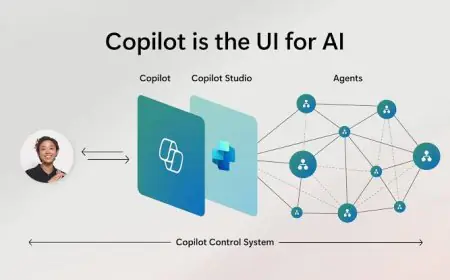
Does this mean the era of AI agents is over? Far from it. Salesforce is rebranding this new phase as "Hybrid Reasoning." The goal is to use LLMs for what they are best at—understanding natural language and intent—while using traditional software logic to execute the actual work. It is a transition from viewing AI as a "digital employee" to viewing it as a "digital interface" for existing, reliable systems.
For investors and competitors, this is a landmark moment. It suggests that the "Trough of Disillusionment" for generative AI has finally arrived at the enterprise level. The winners of 2026 won't be the companies that give their AI the most freedom, but those that build the strongest cages to keep that intelligence on track. In the world of high-stakes business, "mostly right" is still "confidently wrong."