







































Data Distribution and Default Why Googles Unfair Advantage in the AI Era is Unbeatable
Google’s dominance in the 2026 AI race is no longer just about research; it’s about the lethal combination of data, distribution, and default status. By integrating Gemini 3 into Chrome and securing a multi-year deal to power Apple’s Siri, Google has built a vertical moat that rivals like OpenAI and Microsoft find nearly impossible to breach.



The Triple Threat of Data Distribution and Default
For decades, the "Google Moat" was built on a simple premise: be the world’s front door to information. As we enter 2026, the tech industry is realizing that this same moat has become a fortress in the age of artificial intelligence. While competitors like OpenAI and Anthropic are praised for their research breakthroughs, Google is winning through a more traditional, yet "unfair" advantage: the combination of data, distribution, and default status. In a world where intelligence is becoming a commodity, the company that controls the interface controls the market.
The "Search Giant" has successfully transitioned from a defensive posture into an aggressive offensive. By leveraging its ownership of the world's most popular browser, its mobile operating system, and a newly minted partnership with its fiercest rival, Apple, Google has ensured that its AI—Gemini 3—is the silent engine running the digital lives of billions. This vertical integration isn't just a business strategy; it is a structural barrier that is leaving the rest of the industry behind.
The Apple Deal: Reclaiming the Mobile Throne
The most seismic shift of 2026 arrived on January 12, when Google and Apple announced a landmark multi-year collaboration. Under this agreement, the next generation of Apple Foundation Models will be based on Google’s Gemini architecture. This means that Siri, the assistant on over two billion active devices, is now powered by Google’s brain. For Google, this is the ultimate distribution win. It places Gemini at the "moment of intent" for the world’s most valuable consumer base before they even open a browser or an app.
This deal effectively neutralizes the threat from Microsoft and OpenAI in the mobile space. While OpenAI’s ChatGPT was an early partner for Apple Intelligence, the "Siri-Gemini" integration is far deeper, handling complex multimodal reasoning and multi-step planning tasks. As noted by Google’s official newsroom, this partnership allows Apple to maintain its privacy standards through Private Cloud Compute while leveraging Google’s massive 1.2 trillion parameter models to provide world-class intelligence.
Chrome as the Operating System for AI Agents
Google’s second pillar of dominance is its control over distribution through Chrome. With a global market share exceeding 65%, Chrome is no longer just a browser; it is becoming a "Browser-based OS" for AI agents. The rollout of Gemini Auto-Browse has changed the game. Unlike other AI agents that must "watch" a user's screen through slow screenshots, Gemini is built natively into the Chromium engine. It has direct access to the Document Object Model (DOM), allowing it to "see" and interact with websites with zero latency.
This "Default Browser" status gives Google an unassailable data flywheel. Every click, every tab opened, and every research task performed within Chrome feeds back into Gemini's learning loop. This real-time interaction data is a resource that "pure-play" AI companies simply do not have. While others must rely on public web scraping—which is increasingly blocked by paywalls and "no-AI" robots.txt files—Google has a front-row seat to how humans actually navigate the modern web.
The Silicon Moat: Vertical Integration at Scale
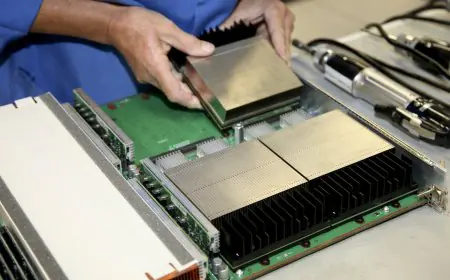
The final "unfair" advantage is Google's control over the hardware that runs its models. In late 2025, Google began mass production of its TPU v7 "Ironwood" chips. According to recent analysis, these custom AI accelerators have reduced the cost of running Gemini by nearly 70% compared to previous generations. By designing its own chips, Google has avoided the "Nvidia Tax" that eats into the margins of every other AI company.
As detailed in reports on Google’s vertical AI stack, this end-to-end control—from the TPU silicon to the Gemini model, the Cloud infrastructure, and finally the user applications like Workspace and Android—yields superior efficiency. Google is the only company that can offer "enterprise-grade" AI at a price point that makes it a default choice for businesses. When you own the chip, the cloud, and the customer, the competition isn't just behind; they are playing a different game entirely.
Conclusion: The Era of the AI Default
The 2026 AI market has proven that "smart" is not enough. Success is now a function of how easily a user can access that smartness. By securing the "Default" position on iPhones, iPads, and Chrome browsers, Google has created a world where users don't have to "choose" AI—it's simply there. In the race for global AI supremacy, the winner wasn't the one who built the fastest chatbot; it was the one who already owned the front door.