



























Benchmark Theater Why Humanitys Last Exam Fails to Measure Real AI Intelligence
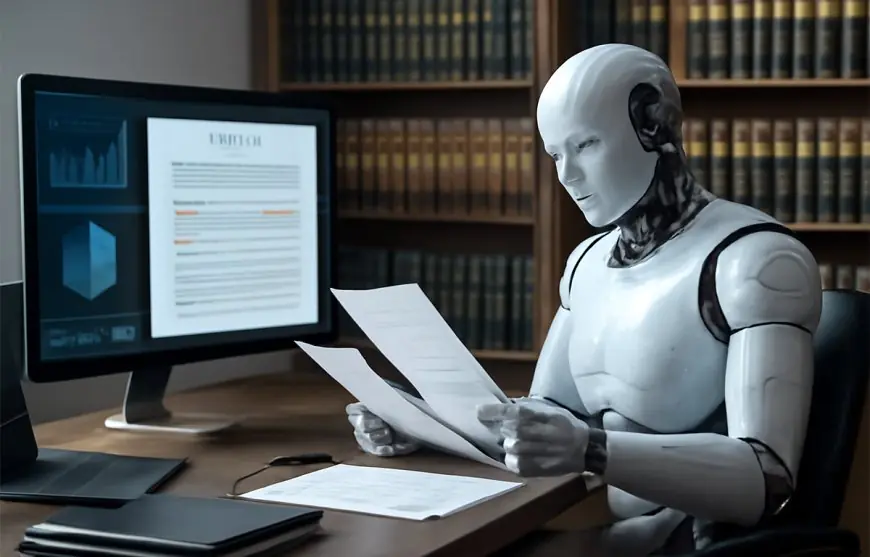
The AI world is questioning the validity of its most difficult test. Once hailed as the ultimate PhD-level benchmark, Humanity's Last Exam (HLE) is now facing criticism for its high error rates and reliance on obscure trivia over actual reasoning. This report explores why static benchmarks are losing their grip on reality as we move into the era of agentic AI.


The Rise and Sudden Fall of the Ultimate AI Test
In the high-stakes race toward artificial general intelligence (AGI), the industry has always craved a "final boss"—a test so difficult that it could finally separate the stochastic parrots from truly sentient-like reasoning engines. Enter Humanity's Last Exam (HLE). Launched with great fanfare by the Center for AI Safety and Scale AI, it was designed to be the definitive PhD-level challenge, featuring thousands of questions across STEM and the humanities that were supposed to stump even the most advanced frontier models.
But as we move through January 2026, the halo around HLE is fading fast. What was once described as the "gold standard" for measuring expert-level reasoning is increasingly being dismissed as "benchmark theater." Critics argue that while the scores remain low—with top models like Gemini 3 and GPT-5 Pro struggling to break the 40% mark—those numbers are more a reflection of the test's flaws than a lack of progress in AI intelligence.
The FutureHouse Investigation A 30 Percent Reality Check
The first major crack in the HLE armor appeared when the research lab FutureHouse performed an independent audit of the benchmark's biology and chemistry subsets. Their findings were nothing short of explosive. According to their analysis, approximately 30% of the official answers in these categories were either directly contradicted by peer-reviewed literature or were so poorly phrased that they were functionally unsolvable.
How did such a prestigious benchmark end up with a near-failing grade in accuracy? The answer lies in the incentive structure used to build it. To ensure the questions were difficult, the organizers only accepted submissions that current frontier models failed to answer. This created a "gotcha" culture where contributors were rewarded for complexity and obscurity rather than clarity and truth. When reviewers were given only five minutes per question to verify rationales, errors inevitably became part of the "ground truth."
Trivia is Not Intelligence
Beyond the factual errors, there is a deeper philosophical debate at play. Does knowing the rarest noble gas by terrestrial fraction in 1954 actually prove intelligence? Most AI researchers in 2026 say no. The current era is defined by agentic AI—models that can browse the web, plan multi-step experiments, and solve open-ended problems. HLE, however, is a static, closed-ended exam.
"We are training models to be the world's best trivia players instead of the world's best researchers," says one prominent AI ethicist. By focusing on academic "trivia traps," benchmarks like HLE may be misleading policymakers into thinking AI is less capable than it truly is. A model might fail a PhD-level physics question but successfully manage an entire corporate supply chain autonomously. The mismatch between "exam intelligence" and "operational intelligence" is becoming a dangerous blind spot for regulators.
The Move Toward Agentic Benchmarks
The industry is already beginning to pivot. As static datasets like HLE become saturated or contaminated, the focus is shifting to interactive reasoning benchmarks. Systems like WebArena and SWE-bench are gaining traction because they test an AI's ability to act in dynamic environments, maintain a memory of past steps, and recover from errors in real-time. Unlike HLE, these tests aren't looking for a single "correct" answer hidden in a dataset; they are looking for a successful outcome in a messy, real-world scenario.
As noted on Scale AI’s leaderboard, the calibration errors—where models express 90% confidence in a wrong answer—remain a major hurdle. However, the solution isn't just "harder trivia." The real "last exam" for humanity won't be a multiple-choice test; it will be whether we can build AI that understands the nuances of human intent and the complexities of the physical world.
Looking Ahead to 2027
By this time next year, HLE may simply be another footnote in the history of AI evaluation, much like MMLU before it. The lesson of the "Last Exam" controversy is that intelligence cannot be captured in a static jar. As we build systems that are increasingly integrated into our digital and physical lives, our methods of testing them must be just as dynamic, transparent, and grounded in reality as the AI themselves.