





























China's Massive Bet: Using AI to Supercharge Its Green Energy Transition
Facing the dual challenge of massive energy demand and ambitious climate goals, China is aggressively integrating artificial intelligence into its power grid. From stabilizing volatile solar and wind outputs to managing complex "virtual power plants," AI is becoming the central nervous system of China's renewable energy strategy.
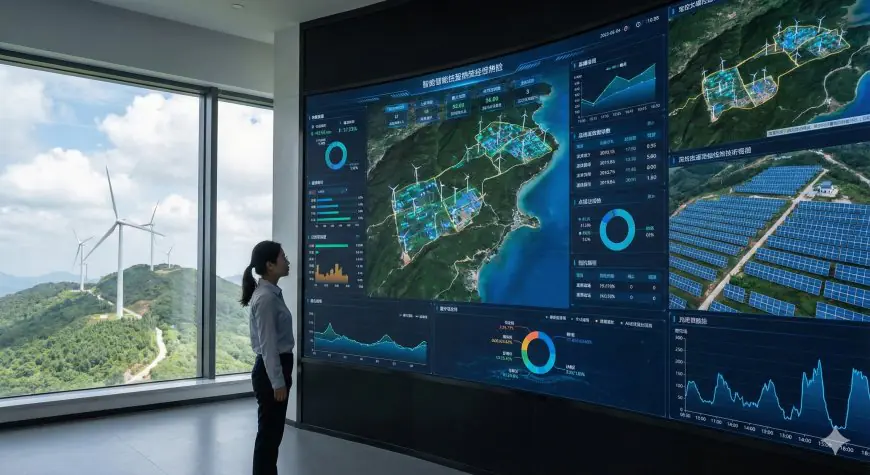

The Digital Nervous System for the World's Largest Grid
China is undertaking one of the most significant industrial pivots in history. As the world’s largest emitter of greenhouse gases, it also holds the title of the world’s aggressive investor in renewable energy. The country has pledged to peak carbon emissions before 2030 and achieve carbon neutrality by 2060. Hitting these targets while keeping the lights on for over 1.4 billion people isn't just a matter of building more solar panels or wind turbines—it's a massive computational challenge. China's answer? A deep, strategic integration of artificial intelligence into every facet of its energy infrastructure.
The fundamental problem with renewables is their unpredictability. The sun doesn’t always shine, and the wind doesn't always blow when peak demand hits. Integrating these intermittent sources into a rigid, traditional power grid is a recipe for instability. China is betting that AI will act as the stabilizing force, turning chaotic weather patterns into predictable power curves.
Taming the Wind and Sun with Algorithms
In provinces like Qinghai and Gansu, vast arrays of solar and wind farms are being hooked up to AI-driven forecasting systems. These aren't just standard weather reports. By utilizing machine learning models that crunch historical weather data, real-time satellite imagery, and on-site sensor readings, grid operators can predict renewable energy output with startling accuracy, often minutes or hours ahead of time.
This predictive capability allows the grid to automatically adjust. If an AI model forecasts a sudden drop in wind power, it can instantly signal hydroelectric dams to increase flow or dispatch battery storage systems to fill the gap. This reduces reliance on dirty coal peaker plants that used to be the only backup option for sudden shortfalls.
The Rise of Virtual Power Plants (VPPs)
Perhaps the most futuristic application of this strategy is the widespread adoption of Virtual Power Plants. A VPP isn't a single physical location; it's a cloud-based network that uses AI to aggregate thousands of decentralized energy resources. Think of rooftop solar panels on residential buildings, industrial batteries, and even the charging batteries of China's massive fleet of electric vehicles.
Individually, these power sources are tiny. But when networked together and managed by an AI that can turn them on, off, or switch them from drawing power to supplying power in milliseconds, they act like a massive, flexible power plant. China is heavily promoting VPPs to handle peak loads in dense urban centers like Shenzhen and Shanghai, turning consumers into "prosumers" who help balance the grid.
Let's look at the key areas where AI is being deployed:
- Grid Optimization: Balancing supply and demand in real-time across vast distances to prevent blackouts.
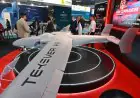
- Predictive Maintenance: Using AI vision (drones) and IoT sensors to spot defects on wind turbine blades or solar panels before they fail.
- Carbon Market Efficiency: Utilizing AI to verify emissions data and manage trading in China’s national carbon market, ensuring transparency and reducing fraud.
A National Strategic Imperative
This isn't just about corporate efficiency; it's national policy. Beijing views AI-enabled energy systems as critical infrastructure, essential for national security and economic competitiveness. The government is pouring resources into state-grid tech subsidiaries and encouraging tech giants like Huawei and Baidu to develop energy-specific AI solutions.
While challenges remain—particularly regarding data silos between different provinces and the sheer complexity of the legacy grid—China’s speed of execution is notable. By treating the entire power network as a data problem to be solved by AI, China is attempting to leapfrog traditional grid management and define what a 21st-century green energy superpower looks like.