





























Apple's Siri AI Revamp Sparks Fresh Optimism Around the Consumer AI Race
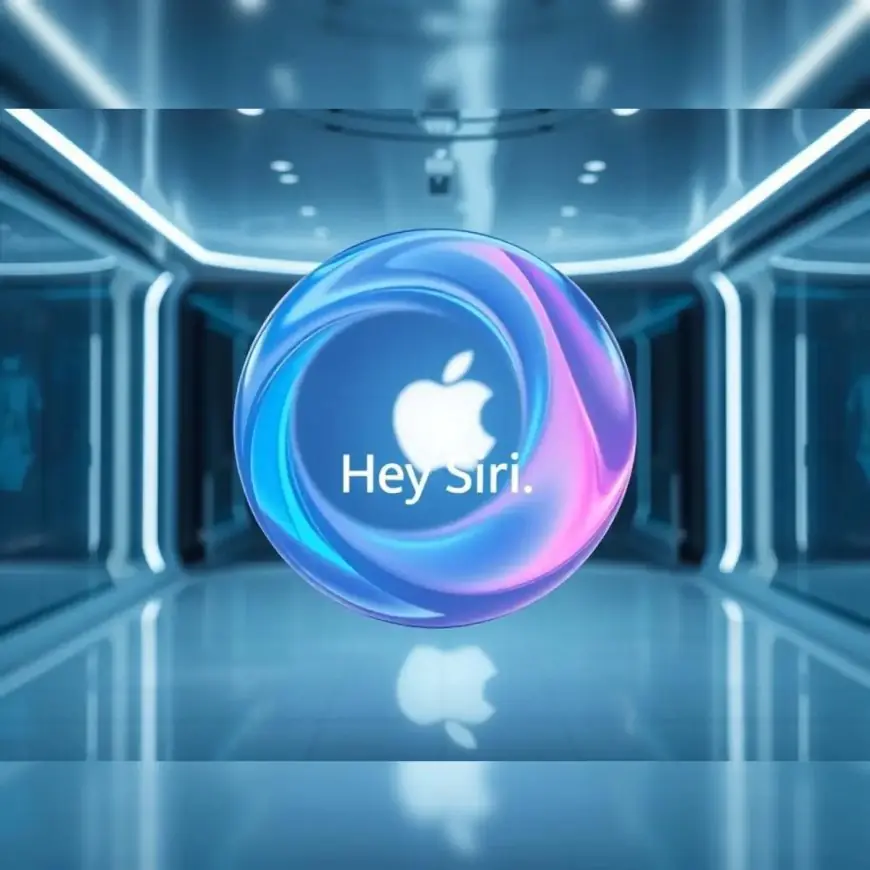
Apple's next-generation Siri initiative is reigniting investor excitement and shifting the battle for AI dominance from enterprise software back to everyday consumer experiences. The revamped assistant promises deeper on-device intelligence and seamless app integration.


The Sleeping Giant Finally Wakes
For years, Siri has been the punchline of tech industry jokes. "Hey Siri, set a timer" worked fine. But anything more complex? Silence, a web search, or the dreaded "Here's what I found on the web." While Google Assistant and Amazon Alexa made incremental progress, and while ChatGPT showed the world what truly conversational AI looked like, Siri stagnated. That era appears to be ending. Apple has finally unveiled its next-generation Siri initiative, and the early signals suggest that the consumer AI race just got a very serious new competitor.
What Apple Is Actually Building
The new Siri is not a single feature. It is a fundamental re-architecture of how Apple handles on-device intelligence. According to Bloomberg's detailed report on the Siri overhaul, the new system combines three technological layers:
- On-device large language models – Optimized versions of LLMs that run entirely on iPhone hardware, preserving privacy while enabling natural conversation
- App Intents 2.0 – A developer framework that allows Siri to understand and execute complex actions across third-party apps without opening them
- Personal context awareness – The ability to reference information across messages, calendars, emails, and photos to answer questions like "When is my mom's flight arriving?"
What makes this different from every previous Siri update is the shift from command-based to conversation-based interaction. The old Siri waited for a specific trigger phrase followed by a simple command. The new Siri is designed for back-and-forth dialogue, where the assistant can ask clarifying questions, remember previous exchanges, and chain together multiple actions based on a single natural language request.
Why This Matters for the Consumer AI Race
For the past eighteen months, the AI conversation has been dominated by enterprise use cases. How can we use AI to write code, analyze spreadsheets, or automate customer service? Those are billion-dollar questions, but they do not touch the lives of ordinary people the way a truly intelligent phone assistant would. Apple is betting that the killer app for AI is not a chatbot on a website. It is the device that is already in your pocket, already knows your schedule, and already has your trust.
"Apple is late to the generative AI party, but they have an advantage no one else can replicate: two billion devices in active use and a privacy-first architecture that makes cloud-based competitors look reckless by comparison." – Mark Gurman, Bloomberg
That quote captures the strategic logic perfectly. Google and OpenAI have smarter models today. But they run in the cloud, which means every query is sent to a remote server. That creates latency, battery drain, and—most importantly for Apple—privacy concerns. Apple's on-device approach is slower to train but faster to infer, and it never sends your personal data to a corporate data center. For a significant slice of consumers, that trade-off is worth making.
How the New Siri Stacks Up Against Competitors
To understand where Apple stands, it helps to compare the new Siri directly against its main rivals on the features that matter most to everyday users:
| Feature | New Siri (Apple) | Google Assistant/Bard | ChatGPT Voice | Alexa (Amazon) |
|---|---|---|---|---|
| On-device processing | Yes (full) | Limited | No | No |
| Third-party app actions | Deep integration | Moderate | Limited (plugins) | Moderate |
| Privacy architecture | Apple-level (highest) | Low | Low | Moderate |
| Conversational memory | Context window ~50k tokens | ~100k tokens | ~128k tokens | Limited |
| Device ecosystem | iPhone, iPad, Mac, Watch, HomePod | Android, Nest, Assistant | Multi-platform | Echo, Fire, third-party |
The table shows that Apple is not leading on raw model capability. Google and OpenAI still have larger context windows and more sophisticated reasoning. But Apple is leading on privacy, device integration, and third-party app actions—the features that matter for daily utility. As The Wall Street Journal noted in their analysis of Apple's AI strategy, the company is playing a different game entirely: ambient intelligence rather than chatbot intelligence. Siri is supposed to help you live your life, not replace your brain.
The Anchor What Developers Need to Know
For the nearly 35 million registered Apple developers worldwide, the new Siri represents both an opportunity and a challenge. The opportunity is App Intents 2.0, which allows any app to expose its functionality to Siri with minimal code. A meditation app could let Siri start a breathing exercise. A grocery app could let Siri add items to a shared list. A ride-hailing app could let Siri book a car. The Apple developer documentation on App Intents (anchor link) provides the full technical specifications, but the short version is this: if your app has a function that a user would want to trigger hands-free, you can now hook it directly into Siri with about a day's worth of development work.
The challenge is that Apple's on-device approach means model updates happen only when users install new iOS versions. Unlike cloud-based assistants that improve daily, Siri improves annually. That creates a fragmentation problem. Users on older phones may not get the new features at all. And developers cannot assume that every user has the latest capabilities. Apple is betting that its rapid iOS upgrade adoption (over 80 percent of active iPhones run the latest version within three months) makes this manageable. But it is a real constraint.
Investor Sentiment The Apple Effect
Wall Street has responded enthusiastically to the Siri news. Apple shares rose 3.2 percent on the announcement, outperforming the broader tech sector by a wide margin. Analysts are updating their models to reflect what they call the "Apple AI uplift"—the idea that a more intelligent Siri could drive both iPhone upgrade cycles and services revenue. If Siri becomes genuinely useful, users may be more willing to subscribe to Apple One bundles or pay for premium iCloud storage to enable advanced AI features.
A Morgan Stanley research note published this week estimates that the Siri revamp could add $15 to $20 billion in annual services revenue over the next three years, purely from increased engagement and premium feature adoption. That is not a massive number for a company Apple's size, but it is meaningful growth in a segment that investors already love. More importantly, it positions Apple as a consumer AI leader rather than a laggard playing catch-up.
What This Means for Your iPhone Experience
For the average iPhone user, the changes will feel gradual at first, then transformative. The first beta of the new Siri is expected to ship with iOS 19 in September 2026, with a full public release in October. Early testers describe a system that finally understands context. You can say "Remind me to call the plumber when I get home" and Siri will use geofencing. You can say "What was that restaurant Sarah texted me last week?" and Siri will search your messages, extract the name, and offer to make a reservation. You can say "Play the podcast I was listening to in the car this morning" and Siri will sync across devices.
These are not revolutionary capabilities in isolation. But combined, they change the calculus of when you reach for your phone versus when you speak to it. The goal is to make Siri the default interface for quick tasks, saving your screen attention for deep work or entertainment. Whether Apple succeeds depends on execution. But the direction is finally clear: Apple is taking consumer AI seriously again.
The consumer AI race is far from over. Google will counter with deeper Android integration. Amazon will push Alexa into more devices. And OpenAI's ChatGPT will continue to improve, potentially becoming the default assistant on non-Apple platforms. But Apple has something that none of its rivals can easily replicate: control over both hardware and software, combined with a privacy message that resonates with a massive global user base.
The new Siri is not going to win every comparison test. It will not be the smartest assistant on day one. But it may be the most useful assistant in daily life, because it lives on the device you already carry, knows the context you already provide, and protects the privacy you already expect. For millions of iPhone users who have been watching the AI revolution from the sidelines, that is more than enough. The sleeping giant has finally woken up. And the consumer AI race will never be the same.