

































China's Massive Delivery of UBTECH Walker S2 Humanoid Robots Sparks Speculation on Robo Military Intentions
China’s recent mass delivery of UBTECH Walker S2 humanoid robots has triggered speculation about potential military applications, raising questions about whether a “robo army” is being quietly built for strategic reasons beyond public awareness.
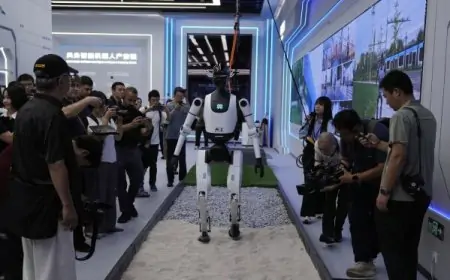
China has recently completed what is claimed to be the world’s first mass delivery of humanoid robots with the UBTECH Walker S2, an advanced AI-powered machine designed for versatile industrial automation and collaboration. Hundreds of these robots have been delivered to partners across China, marking a milestone in the country’s push towards large-scale robotics deployment.


The UBTECH Walker S2, presented as a robust humanoid with capabilities for complex tasks in factories, logistics, and service industries, has caught the eye of global observers beyond just commercial applications. This large-scale rollout naturally raises questions and speculation about China’s potential ambitions in developing robotic systems for military use—a topic that remains enigmatic and often shielded from public discourse.
China is known for its substantial investments in AI-driven military research, and the capabilities showcased by humanoid robots like the Walker S2—advanced mobility, high-level perception, and autonomous operation—could theoretically translate into robotic soldiers or support units in a future conflict environment. Unlike traditional industrial robots, these humanoids can navigate unpredictable settings and perform a variety of tasks that could enhance military logistics, surveillance, or even combat operations.
However, official UBTECH Robotics communications primarily frame the Walker S2 rollout as a leap forward in industrial automation rather than direct military weaponization. The line between commercial AI robotics and defense applications continues to blur, especially in dual-use technologies where civilian advances naturally feed into defense ecosystems.
The global community remains cautious and curious about China’s true scope of robotic militarization efforts, with the scale of deployments like UBTECH’s hinting at a broader strategic vision that may not be fully disclosed. Analysts urge close monitoring of such developments while emphasizing the transformative potential of humanoid robotics for both civilian industry and national security.