






































TSMC Profits Jumped 35 Percent Amid Record Breaking AI Chip Demand
Taiwan Semiconductor Manufacturing Co. (TSMC) reported a record-smashing 35% jump in fourth-quarter profits for 2025, driven by insatiable demand for high-performance AI processors. With revenue crossing the NT$1 trillion mark and plans to boost capital spending to over $52 billion in 2026, the world’s largest chipmaker is cementing its role as the ultimate backbone of the global AI revolution.


The AI Mega Trend Powers a Historic Quarter
On January 15, 2026, the semiconductor world received a definitive signal that the artificial intelligence boom is far from over. Taiwan Semiconductor Manufacturing Co. (TSMC), the silent engine behind nearly every major AI breakthrough, released its fourth-quarter results for 2025, posting a staggering 35% increase in net profit. The company reported a record-breaking T$505.74 billion ($16 billion) in profit, handily beating even the most optimistic analyst estimates and marking its eighth consecutive quarter of year-over-year growth.
This financial surge is more than just a win for shareholders; it is a barometer for the entire technology sector. As giants like Nvidia, Apple, and AMD race to secure the world’s most advanced silicon, TSMC has become the ultimate gatekeeper. CEO C.C. Wei described the current environment as an "AI mega trend," noting that customers are providing "strong signals" for future demand and are reaching out directly to lock in production capacity years in advance.
Advanced Nodes: The Secret Sauce of TSMC’s Success
The core of TSMC’s dominance lies in its "leading-edge" technologies. During the final quarter of 2025, advanced process nodes—specifically 7-nanometer (nm) and smaller—accounted for a massive 77% of total wafer revenue. The company's 3nm technology, which powers the latest high-end smartphones and AI accelerators, alone contributed 28% of the total revenue, up from just 15% a year prior.
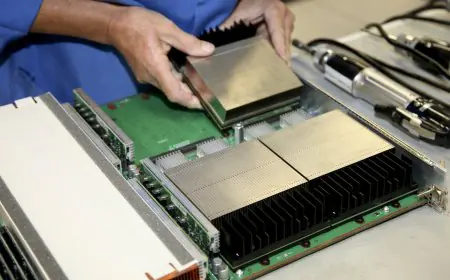
But it’s not just about making smaller transistors. The bottleneck for AI hardware has shifted toward advanced packaging, known as Chip-on-Wafer-on-Substrate (CoWoS). To address this, TSMC announced plans to double its CoWoS capacity again by the end of 2026. This move is specifically designed to support massive projects like Nvidia's upcoming Blackwell and Rubin architectures. According to reports from Investing.com, the company’s gross margins reached a healthy 62.3%, proving that despite rising operational costs, TSMC retains immense pricing power.
A $52 Billion Bet on the Future of Computing
While the 2025 numbers were record-setting, it is the company’s 2026 outlook that has the market truly buzzing. TSMC revealed it will raise its capital expenditure (Capex) budget to between $52 billion and $56 billion for the coming year. This is a significant jump from the $41 billion spent in 2025 and indicates a massive ramp-up in preparation for the 2nm era. Initial production for 2nm chips is already on track for later this year, with pricing expected to be 10-20% higher than current 3nm nodes.
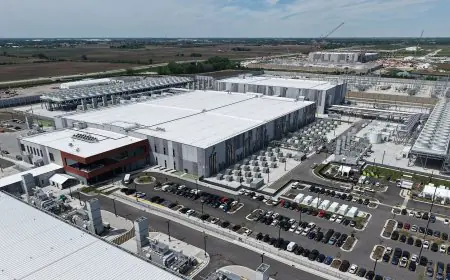
Furthermore, the company is solidifying its global footprint. Despite geopolitical tensions and trade uncertainties, TSMC is moving full steam ahead with its expansion in the United States. Following a reported trade agreement aimed at reducing tariffs, the company is set to increase its total U.S. investment to over $165 billion, which includes building out a massive multi-fab campus in Arizona. This "global logic industry" strategy ensures that even as the world grapples with supply chain security, TSMC remains the "trusted provider" for every major Western tech firm.
The Bellwether of the AI Hardware Market
As noted on TradingView, TSMC's valuation has now climbed to approximately $1.4 trillion, making it more than twice as valuable as its closest regional rival, Samsung. The gap is widening because TSMC has successfully navigated the transition from being a "smartphone-first" company to an "AI-first" infrastructure giant. High-performance computing (HPC) now accounts for 57% of its revenue, while the smartphone segment has moderated to 30%.
For investors and tech enthusiasts alike, the message is clear: the hardware foundation for the next decade of AI is being poured in Taiwan and Phoenix. With a revenue growth forecast of nearly 30% for 2026, TSMC isn't just riding the wave; it's providing the water. As AI continues to move from data centers into daily life through edge computing and smarter devices, the world’s most advanced foundry is poised to remain the single most important company in the global economy.