










































The AI Borrowing Binge: How Data Centers are Driving a U.S. Corporate Bond Surge
U.S. corporate debt issuance is hitting record highs in 2025 as tech giants and hyperscalers pivot from using internal cash to tapping bond markets for the billions needed to build AI-ready data centers and procure advanced chips.
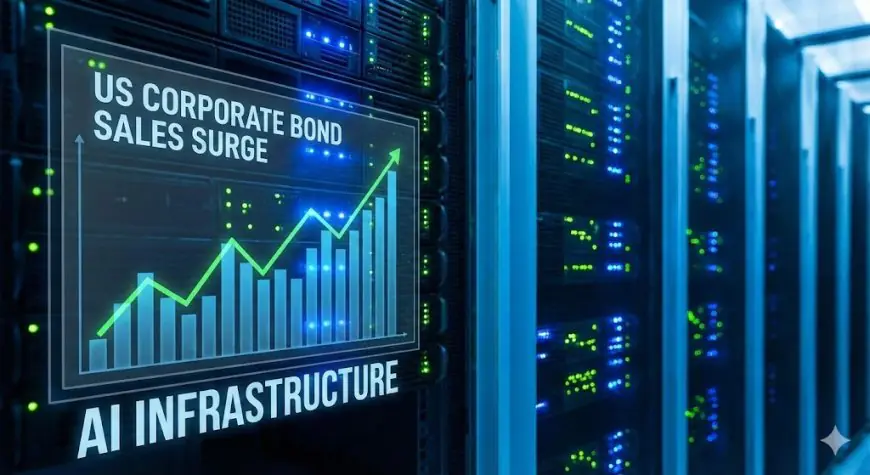


For years, the world’s largest technology companies were known for their "fortress" balance sheets—hoards of cash so massive they rarely needed to visit Wall Street’s credit desks. But in 2025, the insatiable hunger for artificial intelligence infrastructure has flipped the script. U.S. corporate bond markets are witnessing an unprecedented surge in activity, driven not by struggling firms looking for a lifeline, but by the wealthiest titans of Silicon Valley racing to build the physical backbone of the AI era.
According to the latest year-end data, global technology companies issued a staggering $428.3 billion in bonds through early December 2025. U.S. firms led this charge, accounting for over $341 billion of that total. This isn't just a minor uptick; it represents a fundamental shift in how the tech sector operates. The capital expenditure (CapEx) required to build modern data centers—filled with liquid cooling systems and thousands of high-end GPUs—is now so immense that it is outstripping the immediate operating cash flows of even the most profitable companies.
The Hyperscale Debt Race
The primary movers in this debt-fueled expansion are the "hyperscalers": Amazon, Alphabet, Meta, Microsoft, and Oracle. These companies are no longer just software providers; they have become the world’s new industrial giants, spending hundreds of billions on real estate and hardware. In a notable display of this trend, Meta recently executed one of the largest bond offerings in its history, while Oracle tapped the market for an $18 billion deal to accelerate its cloud capacity.
Industry analysts point out that this isn't a "one-and-done" investment. Unlike previous tech cycles, AI hardware has a remarkably short shelf life. With chip architectures like Nvidia's Blackwell evolving every year, companies are forced into a cycle of continuous reinvestment. This structural shift has pushed median debt-to-EBITDA ratios in the tech sector to 0.4—nearly double what they were during the 2020 debt surge. While still healthy by broader market standards, the trajectory has caught the attention of credit analysts.
Market Caution and Credit Spreads
While equity investors have spent much of 2025 cheering on AI growth, the bond market is showing signs of a more measured, if not cautious, perspective. The cost of insuring against a default—known as credit default swap (CDS) spreads—has begun to widen for some of these major players. For instance, five-year CDS spreads for Oracle and Microsoft saw significant climbs toward the end of the year, reflecting a growing unease about the long-term payoff of these massive investments.
The concern is simple: what happens if the returns on AI don't materialize as quickly as the debt matures? "We are seeing a transition where AI is being treated like a utility-scale infrastructure build," notes a recent Reuters analysis. "This requires long-term commitments to power and land that last far beyond a single software product cycle."
Transforming the Financial Landscape
The sheer volume of these bond sales is reshaping the entire U.S. investment-grade market. AI-linked companies now represent a double-digit percentage of major bond indices, occasionally even surpassing the weighting of traditional heavyweights like the banking sector. This concentration risk is forcing portfolio managers to reassess their exposure to the technology industry.
As we look toward 2026, the demand for capital shows no signs of slowing. Some Wall Street forecasts, including those from Mellon Investments, suggest the technology sector may need to issue up to $1.5 trillion in new debt over the next few years to keep pace with the infrastructure demands of generative AI. For the first time in decades, the story of Silicon Valley is being written not just in code, but in the sophisticated ledgers of the global credit markets.
The era of the "cash-only" tech giant appears to be over, replaced by a high-stakes gamble where the fuel is debt and the prize is dominance in the intelligence economy.