



























How Europe is Winning the Global Race for Sovereign AI in 2026
As the "AI arms race" intensifies, European leaders are shifting from regulation to execution. With the 2026 Cloud and AI Development Act and the rise of the Euro-Stack, the EU is carving out a path to technological independence from US and Chinese dominance.

The Shift from Regulation to Sovereign Power
For years, the European Union was labeled the world’s "AI referee"—fast to regulate but slow to innovate. However, as we move through 2026, that narrative is being rewritten. European leaders have realized that being a regulatory superpower isn't enough if the underlying hardware and software are controlled by foreign entities. The continent is now pivoting toward Sovereign AI, a political and technological strategy designed to ensure that Europe’s digital future is built on European soil.
This shift is driven by the realization that AI has become the ultimate tool of geopolitics. In a world where compute capacity is the new oil, Europe is no longer content with being a consumer. From the halls of Brussels to the tech hubs of Berlin and Paris, the focus has moved to the "Euro-Stack"—a homegrown ecosystem of cloud infrastructure, specialized chips, and open-source models that prioritize local data control over silicon valley reliance.
The 2026 Cloud and AI Development Act
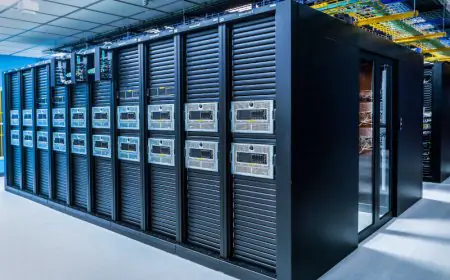
The centerpiece of this movement is the newly proposed Cloud and AI Development Act (CADA), set for rollout in early 2026. This legislative powerhouse aims to harmonize high-performance computing (HPC) resources across the bloc, effectively creating a "Single Market for Compute." Unlike previous efforts, CADA focuses on the "engine room" of AI: data centers and energy efficiency.
By streamlining the expansion of data center capacity and offering subsidies for energy-efficient AI training, the EU is tackling its biggest hurdles—high electricity costs and fragmented infrastructure. According to a recent Atlantic Council analysis, this move is essential to prevent a "dangerous structural dependency" on non-EU hyperscalers who currently control over 65% of the regional market.
The Three-Way Global Struggle
The geopolitical landscape of 2026 has settled into three distinct philosophies. While the United States prioritizes rapid scaling through private capital, and China maintains a state-centric, controlled ecosystem, Europe is betting on Trust and Interoperability.
| Region | Core Philosophy | 2026 Strategic Focus |
|---|---|---|
| United States | Innovation-First | Exporting AI Stacks & Agentic Web |
| China | State-Driven | Autonomous Systems & Hardware Control |
| European Union | Sovereign & Ethical | Euro-Stack & Infrastructure Independence |
This "European Way" is gaining traction among middle powers. Countries in Latin America and Southeast Asia are increasingly looking to the European AI Act and sovereign cloud models as blueprints for their own digital autonomy, wary of being caught in the crossfire of the US-China tech war.
Infrastructure as Foreign Policy
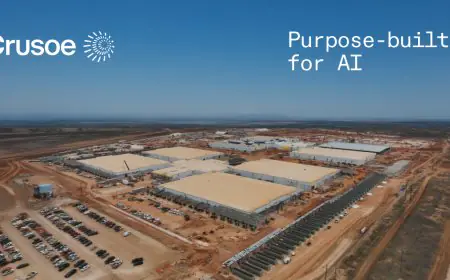
In 2026, infrastructure is no longer just a technical necessity; it is a tool of foreign policy. The European Commission has launched "AI Factories"—giga-scale facilities that allow startups and SMEs to fine-tune massive models like France's Mistral or Germany's Aleph Alpha without sending data across the Atlantic.
These factories are part of the broader "Apply AI Strategy," which targets critical sectors like healthcare, energy, and defense. By 2027, the EU expects to have its first fully autonomous, AI-driven energy grid, managed entirely by sovereign systems. This is more than just a tech upgrade; it is a move to protect critical infrastructure from the "AI poisoning" and cyber-sabotage risks that experts warn will go mainstream this year.
The Road Ahead: Challenges to Autonomy
Despite the momentum, the road to 2030 remains steep. Europe still faces a significant "scaling gap." While research is world-class, the transition from lab to market is often hindered by a lack of venture capital compared to the US. Furthermore, the internal debate over "European Preference" in public procurement continues to divide member states between those wanting strict local-only rules and those favoring a risk-based approach with international partners.
However, the 2026 consensus is clear: technological independence is no longer a luxury—it is a survival strategy. As one senior EU official recently put it, "If you don't own the AI, the AI will eventually own your economy."