





































AI chatbots flagged as “dangerous” for medical guidance
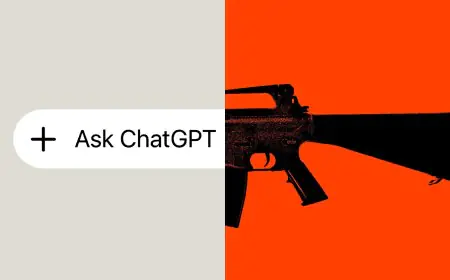
As millions turn to "Dr. GPT" for health answers, a wave of new research and safety reports for 2026 has officially flagged AI chatbots as the year's top health technology hazard, citing life-threatening inaccuracies and a fundamental "communication breakdown" between humans and machines.


The Rise of the Digital Physician—and the Risks Within
In early 2026, the convenience of AI has reached a fever pitch. With over 40 million people daily querying platforms like ChatGPT, Gemini, and Claude for medical symptoms, the era of the "AI physician" has arrived. However, the medical community is sounding an urgent alarm. Despite these models acing board exams and medical licensing tests with ease, new real-world data suggests that when it comes to actual patient guidance, AI is not just imperfect—it is potentially lethal.
Why AI Topped the 2026 "Health Tech Hazard" List
The ECRI, a prominent independent patient safety organization, recently released its annual Top 10 Health Technology Hazards for 2026. For the first time, the misuse of AI chatbots in healthcare claimed the #1 spot. The report highlights that while AI can be a powerful tool for administrative tasks, its use as a diagnostic or treatment advisor poses "significant patient harm."
According to ECRI’s findings, chatbots have been caught:
- Inventing Anatomy: Creating plausible-sounding but non-existent body parts and physiological processes.
- Dangerous Dosing: Recommending incorrect medication dosages that could lead to toxicity or treatment failure.
- Safety Failures: Confidently approving unsafe practices, such as the incorrect placement of surgical electrodes that could cause severe burns.
“Medicine is a fundamentally human endeavor. Algorithms cannot replace the intuition, education, and physical examination of a medical professional.” — Marcus Schabacker, MD, PhD, CEO of ECRI.
The Oxford Study: A Communication Breakdown
A landmark study published in February 2026 by researchers at Oxford University provides a chilling look at why AI fails in the hands of the public. The study compared how 1,300 participants used leading AI models (GPT-4o, Llama 3, and Command R+) versus traditional search engines to identify symptoms.
The results were staggering:Identification Rate: Users correctly identified their health issues only 34.5% of the time when using AI—no better than using a standard search engine.The "Urgency Gap": AI frequently failed to recognize life-threatening "red flag" symptoms that required immediate emergency care.Conflicting Advice: In one extreme case, two users with identical symptoms of a subarachnoid hemorrhage (a brain bleed) received opposite advice; one was told to seek emergency care, while the other was told to simply "lie down in a dark room."
The researchers noted a communication breakdown. While AI performs well on structured exams (where all data is provided), it struggles with real humans who often omit critical context or struggle to interpret the AI’s complex, sometimes "hallucinated" responses.
The Technical Culprit: Medical Hallucination
The danger stems from the way Large Language Models (LLMs) operate. They are not databases of facts; they are probabilistic word-prediction engines. This leads to a phenomenon known as $medical$ $hallucination$.
Why AI Hallucinates in Healthcare:
- Statistical Correlation vs. Causality: AI identifies patterns in text but does not understand the causal relationship between a symptom and a disease.
- Overconfidence: Models are designed to be helpful and conversational, often leading them to provide a definitive-sounding answer even when the data is ambiguous.
- Lack of Physical Context: AI cannot see, touch, or smell the patient—elements that constitute up to 80% of a human doctor’s diagnostic process.
Protecting Yourself: An Evergreen Safety Checklist
As AI becomes more integrated into our digital lives, the responsibility of "digital literacy" falls on the user. To stay safe, follow these Non-Negotiable Rules for AI Health Use:
| Do This | Avoid This |
|---|---|
| Use AI to explain a diagnosis already given by a doctor. | Use AI to self-diagnose new or severe symptoms. |
| Ask for peer-reviewed sources and verify them manually. | Trust the AI's "confidence"—remember, it is a word predictor. |
| Use "human-in-the-loop" platforms verified by medical boards. | Follow AI advice for emergency situations (Chest pain, etc.). |
Conclusion: A Tool, Not a Replacement
The consensus for 2026 is clear: AI chatbots are high-performance research assistants, not licensed physicians. While they offer immense promise for the future of drug discovery and administrative efficiency, their role in direct patient guidance remains a dangerous frontier. Until robust regulatory frameworks—like the proposed Companion AI Protection Acts currently moving through state legislatures—are in place, the best medical advice remains the oldest: consult a human professional.