

































Why 56 Percent of CEOs Say AI is Failing to Deliver Real ROI
A major 2026 enterprise AI roundup reveals a growing skepticism among global leaders, with 56% of CEOs reporting that AI has yet to yield measurable revenue or cost benefits despite billions in investment.



The AI Honeymoon is Officially Over
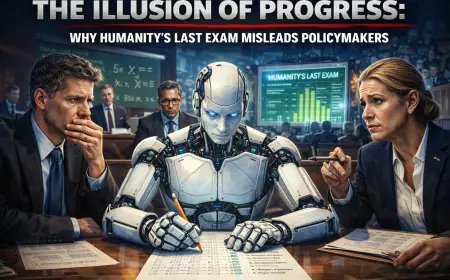
For the past three years, the corporate world has lived in a state of high-octane "FOMO" (fear of missing out). Boards of directors pushed their C-suite executives to implement generative AI at any cost, fearing that a single month of hesitation would mean total obsolescence. But as we settle into 2026, the mood in the boardroom has shifted from breathless excitement to a cold, hard look at the balance sheet. According to a recent enterprise AI industry roundup featured in Forbes, the results of the 29th Global CEO Survey show that the majority of leaders are still waiting for their "AI moment" to translate into actual cash.
The numbers are a stark reality check: 56% of CEOs admit that their AI initiatives have delivered neither increased revenue nor significant cost savings over the past twelve months. In an era where big tech is spending hundreds of billions on infrastructure, this "ROI gap" is creating a palpable sense of caution among enterprise buyers. The era of the "unlimited pilot" is dying, replaced by a ruthless demand for auditable financial outcomes.
The 12 Percent Vanguard: What are they doing differently?
While the majority are struggling, a small "vanguard" of companies is actually cracking the code. Only 12% of CEOs reported achieving both revenue growth and cost reductions simultaneously. This group isn't just lucky; they represent the first wave of truly "AI-native" enterprises. Instead of treating AI as a shiny new toy to be "bolted on" to existing departments, these companies have completely redesigned their core workflows.
Analysts suggest that the difference lies in foundational readiness. Many of the 56% who reported zero returns had jumped straight into building chatbots without first fixing their fragmented data silos or establishing clear governance frameworks. The vanguard, by contrast, invested early in unified data architectures—the "pipes" that allow AI to actually do something useful. As noted by PwC’s 2026 analysis, the companies winning today are those that moved past isolated, tactical projects and integrated AI into their end-to-end business strategy.
The Trough of Disillusionment Hits the C-Suite
The current climate perfectly mirrors Gartner’s famous "Hype Cycle." We have moved past the Peak of Inflated Expectations and are now sliding into the Trough of Disillusionment. For many CEOs, the initial thrill of seeing a LLM write a clever email has faded, replaced by the reality of "hallucinations," security risks, and the sheer computational cost of running these models at scale.
This skepticism is also reflected in a drop in overall CEO confidence. Only 30% of executives say they are "very confident" about their revenue growth prospects over the next year—a significant dip from previous years. The reason? They are caught in a pincer movement: they feel they must spend on AI to stay relevant, but they aren't seeing the productivity boom that was promised to offset that spending. This has led to a "strategic pause" in many sectors, where 2026 budgets are being deferred as leaders demand proof-of-concept for every new tool.
From Chatbots to Agents: The Next ROI Hope
Despite the current ROI woes, the sentiment isn't one of total surrender. Most CEOs still believe that AI is essential to their long-term survival. The focus is simply shifting from Conversational AI (tools that talk) to Agentic AI (tools that act). The hope is that by 2027, autonomous agents will be able to handle complex back-office tasks like tax auditing, supply chain forecasting, and hyper-personalized marketing without human intervention.
To reach that point, however, the industry must solve the "measurement problem." Most enterprises are still using 20th-century KPIs to measure 21st-century technology. Calculating the ROI of an AI tool that makes an employee 10% more "creative" is nearly impossible. Instead, leaders are now looking for "hard metrics"—cycle-time reduction, customer churn decrease, and direct labor-cost offsets.
Conclusion
The message for 2026 is clear: AI is no longer a magic wand. It is a massive, complex, and expensive industrial transformation. The 56% of CEOs who remain unconvinced aren't necessarily "laggards"; they are pragmatists who are tired of the hype. The next phase of the AI race won't be won by the company with the loudest marketing, but by the one that can finally prove that its silicon-based employees are actually earning their keep.