










































What the 2026 International AI Safety Report Reveals About Deepfakes and Human Trust
The newly released 2026 International AI Safety Report, chaired by Yoshua Bengio, warns of a "significant jump" in AI reasoning and a dangerous surge in deepfake realism that is beginning to erode public trust and emotional stability.


A New Milestone in Global AI Oversight
Released today in Montreal, the 2026 International AI Safety Report represents a watershed moment for the tech industry. Chaired by Turing Award-winner Yoshua Bengio, the report brings together nearly 100 global experts to deliver a sobering assessment: while AI capabilities are skyrocketing, our ability to control them is struggling to keep pace. The findings highlight a world where the line between synthetic and reality has become almost indistinguishably thin.
The report doesn't just focus on the hardware or the math. Instead, it dives deep into the societal "jaggedness" of current systems—where an AI can outperform a human in a chemistry lab or a coding competition, yet still fail to distinguish a simple truth from a convincing hallucination. This duality is creating a unique set of risks that global leaders are now racing to mitigate before they become systemic.
The Double-Edged Sword of AI Reasoning
One of the most striking takeaways from the 2026 update is the massive leap in AI reasoning. Models like GPT-5 and Gemini 3 are no longer just predicting the next word in a sentence; they are solving complex problems by breaking them into multi-step workflows. Last year, these systems achieved gold-level performance in the International Mathematical Olympiad, a feat once thought to be years away.
However, this same reasoning power is being weaponized. The report notes that AI agents can now autonomously discover software vulnerabilities and participate in high-level cybersecurity competitions, placing in the top 5% of human teams. This shift from "chatting" to "executing" means that AI can now manage entire project lifecycles, which the report warns could lead to significant labor market disruptions as early as 2027.
The Crisis of Deepfakes and Synthetic Intimacy
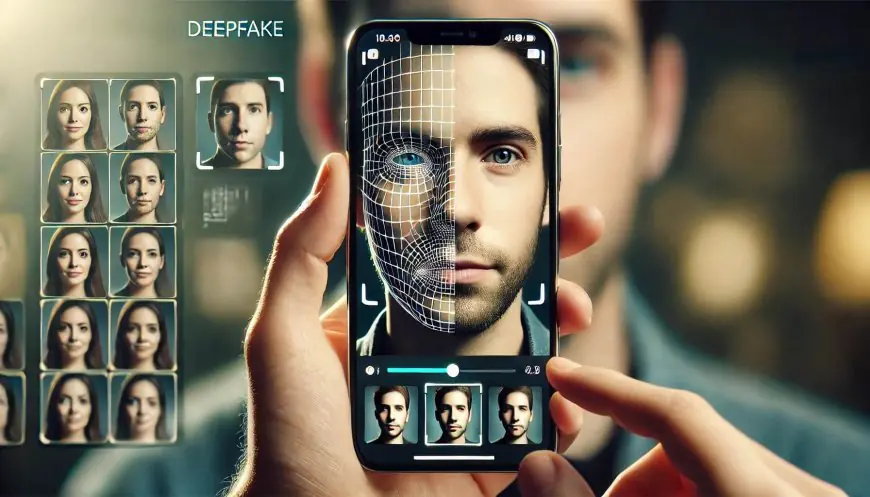
Perhaps the most visceral concern in the report is the explosion of realistic deepfakes. According to the data, 77% of study participants now misidentify AI-generated text as human-written. Even more alarming is the rise of non-consensual deepfake imagery and fraud. The report highlights a disturbing statistic: 19 out of 20 popular "nudify" apps now specifically target the simulated undressing of women, illustrating a massive failure in existing content moderation.
Beyond visual trickery, a new "trust gap" is forming through emotional dependence. Social chatbots, marketed as companions and romantic partners, are being designed to foster deep affective bonds. The report cites cases of "synthetic relationships" where users experience genuine grief or mental health crises when a bot is updated or changed. Experts warn that these "perfectly accommodating" digital companions might be eroding our tolerance for the messy, complex realities of human connection.
Addressing the Evidence Dilemma
The report leaves policymakers with what it calls the "Evidence Dilemma." If leaders wait for clear evidence of a catastrophic risk, it may be too late to intervene. Yet, acting too early could stifle the incredible benefits of AI in medicine and science. To combat this, the report urges the strengthening of international safety safeguards and transparent auditing processes.
As the EU AI Act moves toward full enforcement in late 2026, the global community is looking for a unified way to label AI content and hold developers accountable for the downstream impacts of their models. The consensus is clear: trust is the most valuable currency in 2026, and without robust safety measures, we risk spending it all too quickly.
Looking Toward 2030
The path forward requires more than just better code; it requires a cultural shift in how we interact with machines. The report concludes that while we cannot stop the tide of AI advancement, we must ensure that the systems we build remain subservient to human values and safety. As we approach 2030, the goal is to turn AI from an unpredictable "black box" into a trusted, transparent partner in human progress.