

































Fei‑Fei Li Argues AI Needs “Spatial Intelligence” for Its Next Leap
AI pioneer Fei-Fei Li advocates spatial intelligence—machines’ ability to understand, reason about, and interact with the 3D physical world—as the next vital frontier for AI beyond language models, unlocking breakthroughs in robotics, creativity, and scientific discovery.
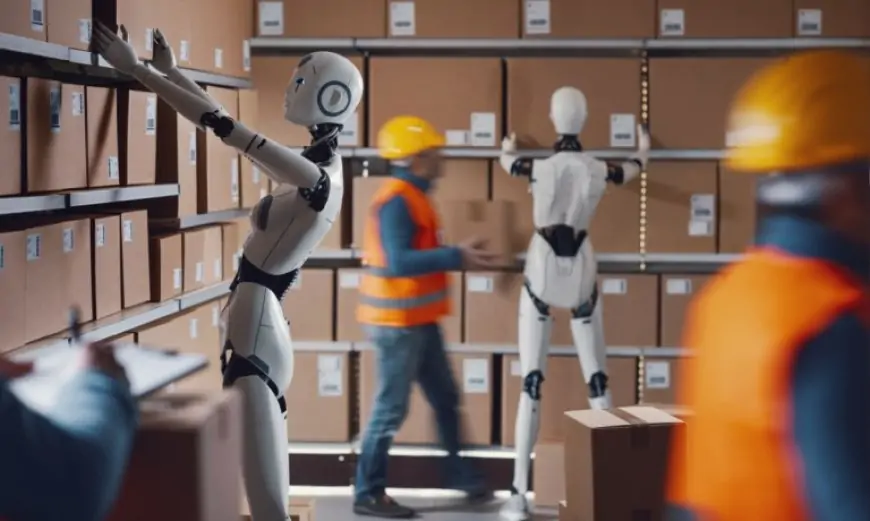
Fei-Fei Li, one of the most influential AI researchers and co-founder of World Labs, has made a compelling case for “spatial intelligence” as the next major leap in artificial intelligence. In a landmark essay published in late 2025, Li explains that while large language models (LLMs) have revolutionized working with abstract knowledge, AI’s future breakthroughs depend on developing machines that can perceive, reason about, and interact with the physical world in three dimensions.


Spatial intelligence, Li argues, is the foundation of human cognition and everyday tasks—from parking a car by visualizing spatial gaps to navigating crowded spaces or catching moving objects. AI systems with spatial intelligence would possess the imagination, agility, and scientific rigor needed to operate effectively in our complex environments.
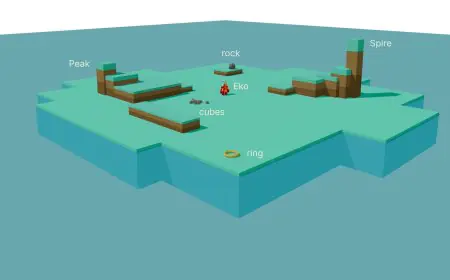
At the core of this vision are “world models”—a new breed of generative AI capable of constructing spatially consistent, physics-abiding 3D environments using multimodal inputs such as images, videos, and actions. These models can not only simulate and predict spatial dynamics but also interact with real or virtual worlds, enabling truly autonomous robots, immersive creativity tools, and accelerated scientific research.
Fei-Fei Li’s World Labs is actively developing these world models, aiming to extend AI’s reach beyond language tasks to domains like robotic learning, healthcare, drug discovery, climate modeling, and education. She emphasizes that spatially intelligent AI will augment human expertise, creativity, and care rather than replace it.
The challenges are significant—a spatially aware AI requires advanced perception, geometric reasoning, and the ability to generalize across diverse scenarios. However, the payoff is immense, promising AI systems that better understand and collaborate with humans in dynamic, real-world contexts.
As Li notes, we stand on the brink of endowing machines with a capability nature first developed hundreds of millions of years ago in animals: a deep spatial awareness that grounds cognition in the physical realm. This next frontier promises to reshape how AI contributes to innovation, autonomy, and our understanding of the world.