



































How South Korea Is Becoming a Global AI Infrastructure Powerhouse
SK Telecom and NVIDIA are accelerating ambitious plans for a large-scale AI cloud and AI factory ecosystem in South Korea. The move signals the country's growing determination to transform from a consumer electronics giant into a leading global hub for artificial intelligence infrastructure.


A Quiet Revolution in East Asia
When most people think of South Korea and technology, they picture Samsung smartphones, LG displays, and lightning-fast broadband. But something bigger is brewing beneath the surface. SK Telecom and NVIDIA just accelerated their joint plans to build a massive AI cloud and AI factory ecosystem—and this time, the rest of the world should pay attention. South Korea is not content to just manufacture the devices that run AI. It wants to build the infrastructure that powers it.
Why South Korea and Why Now
The timing is no accident. South Korea already possesses three things that every AI infrastructure hub desperately needs: unbelievably fast internet, abundant reliable electricity, and a government that treats semiconductors as a national security priority. Add to that the country's geographic position between China and Japan, and you have a natural nexus for AI factories serving all of Northeast Asia. The partnership between SK Telecom, the country's largest wireless carrier, and NVIDIA, the undisputed king of AI compute, is designed to exploit exactly these advantages.
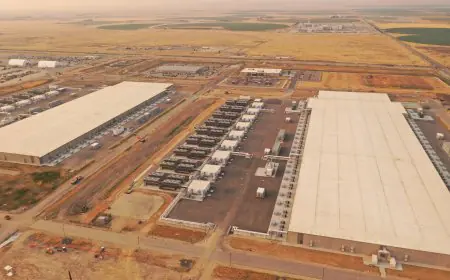
According to a detailed Reuters report on the accelerated plans, the initial phase will focus on building out specialized AI cloud regions optimized for training large language models and running inference at scale. Unlike generic cloud regions that try to serve every possible workload, these will be AI-first—meaning the networking, storage, and compute are all designed around the specific demands of transformer models.
The Three Pillars of Korea AI Infrastructure
The SK Telecom-NVIDIA collaboration rests on three distinct but interconnected pillars. Each addresses a different bottleneck in the current AI infrastructure stack:
- AI Cloud Regions – Purpose-built data centers using NVIDIA's latest GPU clusters, optimized for both training and inference workloads, with SK Telecom managing the networking and customer relationships.
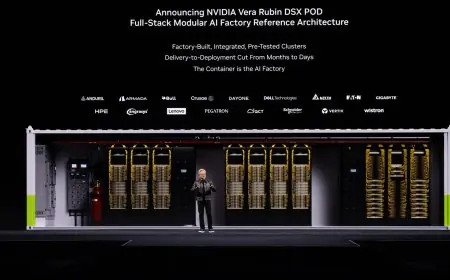
- AI Factory Ecosystem – A reference architecture for enterprises to build their own on-premises AI factories, combining NVIDIA hardware with SK Telecom's operational expertise and local support.
- National AI Compute Network – A government-backed initiative to interconnect these AI factories into a unified fabric, allowing researchers and smaller companies to access capacity that would otherwise be out of reach.
What makes this different from similar announcements in the United States or Europe is the level of government coordination. The South Korean Ministry of Science and ICT has already signaled its willingness to fast-track permits and provide tax incentives. That is not something you see in California or Germany.
Memory Advantage The Secret Weapon
South Korea has another ace up its sleeve that most people overlook. The country is home to both SK Hynix and Samsung Semiconductor—two of the world's three dominant memory manufacturers. As we covered in our recent NVIDIA and SK Hynix partnership analysis, the next generation of AI infrastructure depends critically on High Bandwidth Memory (HBM). South Korean companies already lead in HBM production. By colocating AI factories near memory fabrication facilities, SK Telecom and NVIDIA can reduce latency and optimize supply chains in ways that American and European competitors simply cannot match.
This geographic and industrial concentration creates a virtuous cycle. More AI factories drive more demand for advanced memory. More memory production drives down costs and improves performance. Lower costs attract more customers to the AI factories. Rinse and repeat. It is the same flywheel effect that made Shenzhen the hardware capital of the world. Now South Korea is trying to do it for AI infrastructure.
What This Means for Global AI Competition
The implications extend far beyond South Korea's borders. For years, the global AI infrastructure map has been dominated by the United States (thanks to NVIDIA and the hyperscale clouds) and China (thanks to state-directed investment and domestic champions like Huawei and Tencent). South Korea is now positioning itself as a third pole—a neutral, reliable, and technologically sophisticated alternative for customers who do not want to put all their eggs in either the US or Chinese basket.
As noted in a recent Bloomberg feature on South Korea's AI ambitions, Japanese and Southeast Asian enterprises are already expressing interest. The combination of geographic proximity, political stability, and world-class infrastructure is proving attractive to companies that have grown nervous about relying entirely on US-based clouds or Chinese alternatives. South Korea is quietly becoming the Switzerland of AI infrastructure—neutral, capable, and open for business.
The Challenges That Remain
Of course, nothing about this is guaranteed. South Korea faces genuine headwinds. The country's energy grid, while reliable, will need massive upgrades to support gigawatt-scale AI factories. Talent is another bottleneck—there are only so many AI infrastructure engineers to go around, and global demand is fierce. And then there is the geopolitical tightrope. South Korea has deep economic ties to both the United States and China. As AI becomes more entangled with national security, that balancing act will only get harder.
SK Telecom executives acknowledge these challenges openly. In a presentation accompanying the announcement, the company outlined plans to train 10,000 AI infrastructure specialists over the next three years through partnerships with Korean universities and global institutions. They are also exploring small modular nuclear reactors to power future AI factories—a solution that would bypass grid constraints entirely. Those are long-term bets, but they signal seriousness of intent.
What This Looks Like for Customers
For enterprises shopping for AI compute, the emergence of South Korea as a serious player is excellent news. More competition means better pricing and more options. SK Telecom is expected to offer pricing that undercuts major US clouds by a meaningful margin, at least initially, to attract anchor customers. The company is also emphasizing data sovereignty—for customers in Asia who want their data to stay in Asia, South Korean AI factories offer a compelling alternative to sending everything across the Pacific.
According to an official SK Telecom press release on the accelerated timeline, the first AI cloud regions are expected to come online in early 2028, with full AI factory capabilities following later that year. That timeline is aggressive but plausible, given the existing infrastructure and government support. Early access customers are already being lined up, with priority given to Korean AI startups and research institutions before a broader international rollout.
The Bottom Line on Korea AI Rise
South Korea is not trying to beat the United States at its own game. It is playing a different game entirely. Reliability, neutrality, and integration—these are the keywords. The country cannot outspend America on pure research or out-manufacture China on volume. But it can offer something that neither superpower can: a trusted, technologically excellent, and geographically strategic home for AI infrastructure that serves all of Asia without picking sides. That is a compelling value proposition. And if SK Telecom and NVIDIA execute on their current plans, the world may soon think of South Korea the way it currently thinks of Northern Virginia for data centers. The AI factory capital of Asia has a nice ring to it.