




































Why Anthropic Seeks Greater Independence Through Its Own Data Centers
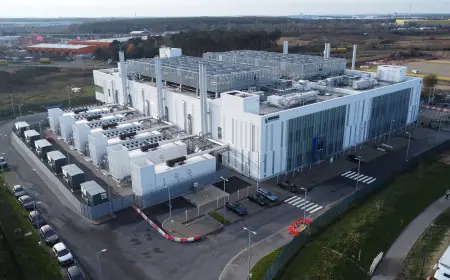
According to Reuters, Anthropic is exploring leasing and operating its own data centers while seeking additional financial backing from Google. The strategy could reduce long-term computing costs and lessen dependence on external cloud providers as demand for AI capacity surges.


A Startup Growing Up Fast
Anthropic has always been defined by its technology. Claude. Constitutional AI. Safety-first deployment. But a quiet transformation is underway—one that has less to do with models and everything to do with bricks, mortar, and electricity. According to exclusive reporting from Reuters, Anthropic is exploring leasing and operating its own data centers while simultaneously seeking additional financial backing from Google. The move signals a major shift: Anthropic no longer wants to be just an AI model provider. It wants to control the infrastructure its models run on.
What Anthropic Is Planning
The Reuters report, based on sources familiar with the matter, outlines a multi-phase infrastructure strategy. Here is what Anthropic is reportedly pursuing:
- Direct data center leasing – Anthropic is in talks to lease existing data center space from wholesale providers, rather than renting compute by the hour from cloud giants
- Custom hardware deployment – The company would install its own servers, networking gear, and cooling systems, optimized specifically for Claude workloads
- Google financial backing – Anthropic is seeking expanded investment from Google, which already holds a roughly 10 percent stake in the company
- Long-term capacity planning – The data centers would be designed to support Claude training and inference for the next 5-7 years, reducing spot-market exposure
"Anthropic has outgrown the 'startup using someone else's cloud' phase. The scale of compute they need for frontier models makes owning or leasing infrastructure economically unavoidable. This is a natural evolution, but it also changes the competitive dynamics." – Anonymous cloud infrastructure executive (via Reuters)
The quote captures the strategic imperative. Scale changes everything. When you are training billion-dollar models, the markup that cloud providers charge becomes a line item worth fighting over. By controlling its own infrastructure, Anthropic could potentially cut its compute costs by 30-50 percent over a multi-year horizon. That is not incremental. That is existential.
Why Now The Economics of AI Compute Are Shifting
The timing is not accidental. AI compute costs have fallen dramatically over the past 18 months, but they remain the single largest expense for frontier model providers. Anthropic reportedly spends hundreds of millions of dollars annually on cloud compute from AWS (its primary partner) and Google Cloud. As models grow larger and user demand increases, that number is projected to exceed $1 billion within two years. At that scale, building or leasing your own capacity becomes cheaper than renting.
But there is another factor: control. Cloud providers are also competitors. AWS is neutral, but Google is an Anthropic investor and also builds its own Gemini models. Microsoft backs OpenAI. The major clouds have conflicting loyalties. By owning its own data centers, Anthropic gains independence from the strategic priorities of any single cloud partner. It can optimize hardware specifically for Claude, schedule training runs without competing for capacity, and keep its most sensitive intellectual property behind its own physical security.
As noted in a Bloomberg analysis of Anthropic's infrastructure ambitions, the company is also exploring direct chip purchases from NVIDIA and AMD, bypassing cloud intermediaries entirely. That would give Anthropic access to the latest GPUs months before they appear in cloud instances, a significant competitive advantage for training next-generation models.
How Anthropic Compares to Rivals on Infrastructure Strategy
To understand the significance of Anthropic's move, it helps to compare its current and planned infrastructure approach against its main competitors. The differences are stark:
| Company | Current Infrastructure Model | Own Data Centers? | Primary Cloud Partner | Annual Compute Spend (est.) | Planned Shift |
|---|---|---|---|---|---|
| Anthropic | Cloud-native (AWS/Google) | No (planned) | AWS, Google Cloud | $500M+ | Leasing own DCs by 2027 |
| OpenAI | Cloud-native (Microsoft Azure) | No | Microsoft Azure (exclusive) | $2B+ | Negotiating capacity guarantees |
| Google (Gemini) | Own data centers | Yes (global fleet) | Self | $5B+ (internal) | Expanding capacity |
| Meta (Llama) | Own data centers + cloud | Yes (hybrid) | Self + partners | $1.5B+ | Building AI-specific clusters |
| Cohere | Cloud-native (Google/AWS) | No | Google Cloud, AWS | $100M+ | No announced plans |
The table shows that Anthropic is currently in the same position as OpenAI and Cohere—entirely dependent on cloud partners for compute. But its planned shift would move it toward the Google/Meta model of owned or leased infrastructure. That is a multi-hundred-million-dollar bet on vertical integration. If successful, it would give Anthropic cost advantages and strategic independence that pure-cloud competitors cannot match. If unsuccessful, it would tie up massive capital in depreciating assets.
The Anchor Google's Role More Than Just a Check
Google's reported interest in expanding its backing of Anthropic is the most intriguing angle of the Reuters report. Google already has a 10 percent stake in Anthropic, acquired through a combination of cash and cloud credits. But the new discussion reportedly involves direct investment for infrastructure build-out—potentially hundreds of millions of dollars specifically earmarked for data center leasing and hardware procurement.
The Google Cloud and Anthropic strategic partnership overview (anchor link) emphasizes their existing collaboration on AI safety and model deployment. But infrastructure investment would be a significant escalation. For Google, the calculus is clear: Anthropic is a hedge against OpenAI's Microsoft alliance. By helping Anthropic build independent infrastructure, Google ensures that there will always be a strong alternative to the Microsoft-OpenAI axis, even if that alternative does not run exclusively on Google Cloud.
For Anthropic, Google's backing provides both capital and validation. But it also creates complexity. Anthropic's primary cloud partner today is AWS (Amazon invested $4 billion in Anthropic). Deepening ties with Google could strain that relationship. Amazon may demand exclusivity or reduce its investment. Anthropic is walking a strategic tightrope, balancing three powerful patrons (Amazon, Google, and traditional VCs) while trying to build its own independent future.
The Technical Challenge Building an AI Data Center from Scratch
Leasing a data center is not like renting an apartment. You do not just sign a lease and move in. Anthropic would need to procure, configure, and deploy thousands of servers, networking switches, power distribution units, and cooling systems. That is a multi-year, multi-hundred-million-dollar capital expenditure program. And it requires expertise that Anthropic currently does not have in-house. The company is known for world-class AI researchers, not facility managers.
This is where the Google connection becomes critical. Google has decades of experience building hyperscale data centers. It could provide technical assistance, vendor relationships, and even design templates for Anthropic to adapt. Without that support, Anthropic would be starting from close to zero. With it, the timeline could be compressed significantly.
A Data Center Dynamics analysis of Anthropic's infrastructure needs estimates that a modest owned/leased footprint suitable for training frontier models would require 50-100 megawatts of power capacity. That is roughly the size of a medium hyperscale data center. Construction or retrofitting would take 18-24 months and cost $500 million to $1 billion. Those numbers are not trivial for a private company still burning cash on R&D.
What This Means for the AI Cloud Market
Anthropic's infrastructure ambitions are a bellwether for the entire AI industry. If Anthropic succeeds in reducing its cloud dependence, every other large AI startup will ask the same question: why are we paying cloud markups when we could own our own capacity? The answer today is complexity and capital. But as the industry matures, both barriers will fall. The largest AI companies will increasingly look like traditional tech infrastructure providers—with their own data centers, supply chains, and hardware roadmaps.
This trend is already visible. OpenAI is negotiating capacity guarantees with Microsoft, effectively reserving entire data center buildings for its exclusive use. Meta and Google already own their infrastructure. The only question is how quickly the rest of the industry follows. Cloud providers like AWS and Google Cloud will still dominate the small and medium enterprise market. But the hyperscale AI model providers are graduating to become their own infrastructure layer.
Risks and Uncertainties
Of course, the plan could fail. Data center leasing markets are tight, with vacancy rates below 5 percent in major AI hubs like Northern Virginia and Dallas. Anthropic may not be able to secure the space it needs at reasonable prices. Hardware lead times are also extended, with NVIDIA GPUs still in short supply. And the company would need to hire an entirely new team of infrastructure engineers, facility managers, and supply chain specialists—talent that is already bid up by Google, Meta, and Microsoft.
There is also the opportunity cost. Every dollar spent on data centers is a dollar not spent on model research or product development. Anthropic is still competing fiercely with OpenAI and Google on model quality. A costly infrastructure detour could distract from that core mission. The company will need to execute flawlessly to avoid falling behind on the technology front while building out its physical plant.