







































Taiwan’s new sovereign AI cloud hub turbocharges national computing power
Taiwan has opened a high-performance cloud centre in Tainan, anchored by its largest supercomputer, to drive “sovereign AI” infrastructure, bolster national digital sovereignty, and position the island as an AI technology leader beyond chip manufacturing.

Taiwan President Lai Ching-te has opened a new high-performance cloud computing centre in the southern city of Tainan, framing it as a flagship project in the island’s “sovereign AI” strategy. The facility is intended to give the government, researchers, and local industry direct access to cutting‑edge compute without depending on foreign hyperscalers, strengthening both digital sovereignty and national security.


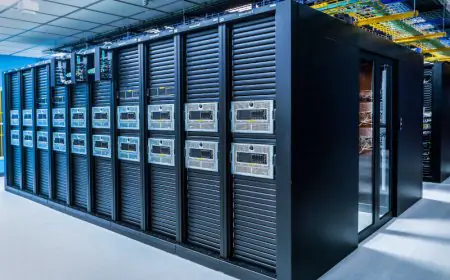
At the heart of the site is the Nano 4 supercomputer, now Taiwan’s largest and most advanced AI system, housed in a 15‑megawatt data centre built for high-density GPU workloads. Nano 4 is equipped with thousands of Nvidia H200 and next‑generation Blackwell accelerators, delivering petaflop‑scale performance for large language models, scientific simulations, and multimodal AI.
Officials describe the cloud centre as a key engine in Taiwan’s “Ten Major AI Infrastructure Projects,” a multiyear program that aims to generate trillions of Taiwan dollars in economic value and elevate the island to “AI island” status. The initiative seeks to extend Taiwan’s role beyond chip fabrication by building full-stack capabilities spanning data centres, national AI cloud services, and sector-specific applications in healthcare, manufacturing, and public services.
The new hub is tightly intertwined with Taiwan’s semiconductor ecosystem, leveraging Taiwan Semiconductor Manufacturing Company’s position as Nvidia’s primary foundry partner to secure access to the latest AI chips. Policymakers argue this integration proves Taiwan can marry world-leading chip production with system integration, high-performance computing, and cloud-scale AI services, creating a defensible strategic advantage.
standpoint, the cloud centre is a concrete step toward “sovereign AI,” a concept focused on ensuring that data, models, and critical compute remain under domestic control. By concentrating AI infrastructure onshore, Taiwan aims to guarantee data residency for sensitive information, reduce exposure to geopolitical supply risks, and offer local firms a secure platform for training and deploying advanced models.
Global investors and enterprise partners are watching the move as a template for middle powers seeking digital independence while still participating in global AI supply chains. If successful, Taiwan’s sovereign AI cloud strategy could reshape its economic profile from indispensable chip factory to an integrated AI infrastructure hub, tightening its grip on the technologies underpinning the next wave of digital transformation