





































Why Google is Set to Dominate All AI Companies in 2026
Google has staged a historic comeback to reclaim its throne as the world’s leading AI powerhouse. Through the launch of Gemini 3.0, a landmark $1 billion partnership with Apple, and a decade-long lead in custom TPU silicon, Alphabet is outmuscling competitors by owning the entire AI stack—from the hardware and the cloud to the most popular consumer platforms on Earth.

The Great AI Rebound of Alphabet
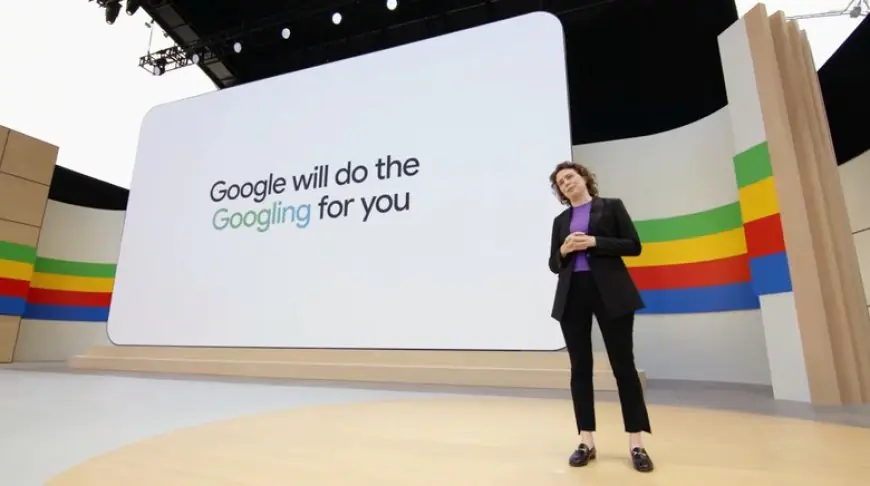
At the start of 2024, many analysts were writing "obituaries" for Google’s search dominance, fearing that nimble startups like OpenAI would leave the tech giant in the dust. Fast forward to 2026, and the narrative has flipped entirely. Google has not only reclaimed its lost ground but has built a defensive moat so deep that it is effectively outcompeting every other player in the generative AI race. This resurgence isn't just about better chatbots; it’s the result of a "full-stack" strategy that links silicon, software, and scale in a way no other company can match.
The turning point came with the late-2025 release of Gemini 3.0, a model that finally ended the "benchmark wars" by consistently outperforming its peers in multimodal reasoning, coding, and long-context window processing. But the true signal of Google’s victory isn't found in a lab—it’s found on the home screens of billions of users.
Reason 1: The Apple-Siri "Kingmaker" Deal
In what is being called the most consequential platform partnership of the decade, Apple officially confirmed in January 2026 that Google Gemini now powers the foundational reasoning behind the new Siri. Under this $1 billion annual agreement, Apple has effectively admitted that Google’s AI is the most capable foundation for its two billion active devices.
This deal gives Google an "unfair" data advantage. While other AI companies struggle to find high-quality training data, Google’s models are now learning from the real-world interactions of the world’s most affluent consumer base. By underpinning the iPhone's "Private Cloud Compute" infrastructure, Google has secured a distribution network that its rivals simply cannot replicate. As noted by Morningstar, this strategic alliance positions Google as the "operating system for intelligence" across the entire mobile market.
Reason 2: The Custom TPU Silicon Advantage
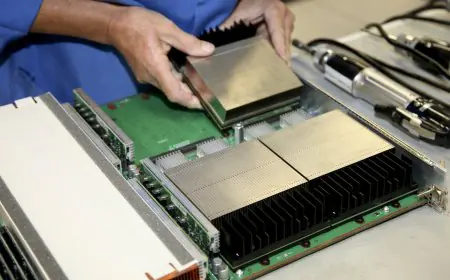
While the rest of the world fights over a limited supply of Nvidia GPUs, Google has spent a decade building its own secret weapon: Tensor Processing Units (TPUs). In 2026, the rollout of the TPU v7 has given Google a massive cost and performance advantage. Because Google designs its own chips specifically for its own models, it can train and run AI at a fraction of the cost of its competitors.
This "vertical integration" is the primary reason Google Cloud’s net income is projected to hit $20 billion this year. By renting out its custom silicon to companies like Anthropic and potentially Meta, Google has transitioned from a software company to a critical infrastructure provider. Analysts at Intellectia.AI highlight that Google’s ability to offer "GPU-level" performance at lower prices is forcing a market-wide shift in how AI is commercialized.
Reason 3: Mastering the Agentic Web
Google has successfully moved beyond "chat" and into "action." The 2026 iteration of Google Search is no longer a list of links; it is a Search Generative Experience (SGE) that acts as a personal agent. Whether you are planning a multi-city travel itinerary or analyzing a complex legal contract in Google Docs, Gemini 3.0 handles the execution, not just the advice.
This "Agentic Autonomy" is integrated into every corner of the Google ecosystem:
- Android: On-device Gemini Nano handles private tasks without data ever leaving the phone.
- Workspace: AI agents now attend meetings, draft follow-up code, and manage project timelines autonomously.
- YouTube: Advanced multimodal AI allows users to search for specific moments within billions of hours of video using natural language.
Reason 4: Total Ecosystem Verticality
Google’s final advantage is its ownership of the entire "stack." Most AI companies own a model but rent the cloud (like OpenAI). Some own the cloud but don't have the user data (like AWS). Google is the only entity that owns the chip (TPU), the cloud (GCP), the model (Gemini), and the distribution (Search, Android, YouTube, Chrome). This creates a "flywheel effect" where every search query makes the models smarter, and every smart model makes the cloud more valuable.
With Alphabet's market cap now approaching $4 trillion, the market has clearly crowned a winner. By playing the "long game" and investing in infrastructure years before the AI hype cycle began, Google has ensured that in 2026, the world doesn't just use AI—it uses Google’s AI.