









































From Talk to Action: Major Enterprises Pivot to AI Agents for CX and Automation
A major shift is underway in the corporate world as businesses move beyond simple chatbots to deploying "Agentic AI." New reports from 2025 and 2026 highlight that top companies are aggressively adopting AI agents capable of autonomous decision-making and task execution, fundamentally reshaping customer experience and operational workflows.



The End of the Passive Chatbot
For the past two years, the corporate world has been enamored with Generative AI's ability to converse, summarize, and draft text. However, a distinct shift in strategy is emerging among the Fortune 500. The novelty of a chatbot that can merely "talk" is wearing off. In its place, a new wave of "Agentic AI" is taking over—systems designed not just to chat, but to act.
Recent reports indicate that major players are rethinking their customer experience (CX) and automation roadmaps to focus on large-scale deployments of AI agents. Unlike traditional Large Language Models (LLMs) that function as sophisticated text predictors, these agents are engineered to execute complex workflows, navigate software environments, and make decisions with minimal human oversight.
By the Numbers: A Rapid Adoption
The speed of this transition is staggering. According to a February 2026 report by Microsoft, nearly 80% of Fortune 500 companies are already utilizing active AI agents in some capacity. This aligns with data from Gartner, which predicts that by the end of 2026, 40% of enterprise applications will feature embedded "task-specific" AI agents—a massive leap from less than 5% just a year prior.
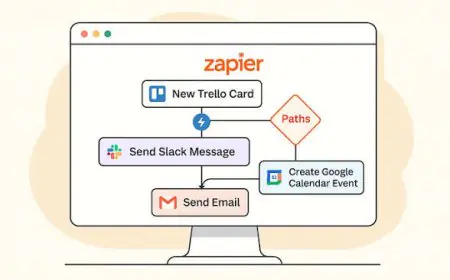
This surge is driven by a simple realization: ROI comes from action, not just conversation. "Enterprises are moving from 'automate to assist' to 'autonomously resolve,'" notes a recent industry analysis. The goal is no longer to have a bot explain a refund policy to a customer, but to have an agent physically process the refund, update the ledger, and send the confirmation email without a human lifting a finger.
Real-World Shifts in Strategy
We are seeing this strategy materialize in bold operational changes. Companies are integrating role-based agents directly into their core systems:
- Oracle recently unveiled a suite of AI agents embedded within their Fusion Cloud Applications, designed to overhaul supply chain and HR processes by autonomously flagging anomalies and suggesting fixes.
- Frontier Airlines made headlines with a controversial but pioneering move to transition purely to digital, agent-assisted support, effectively betting the house on the efficiency of automated resolution over traditional voice channels.
The "Action Gap"
The pivot highlights the "action gap" that plagued early GenAI implementations. Early adopters found that while LLMs were great at answering questions, they often hit a wall when a user needed a tangible outcome. The new generation of Large Action Models (LAMs) bridges this by being able to use tools—accessing APIs, browsing the web, and manipulating user interfaces to complete tasks.
The Governance Challenge
However, handing over the keys to autonomous agents brings new risks. The shift has forced a massive rethink of cybersecurity and governance. As agents begin to act on behalf of the company, "agent observability" has become a critical buzzword. IT leaders are now scrambling to implement Zero Trust principles for non-human identities, ensuring that an AI agent in finance can't accidentally—or maliciously—access sensitive HR data.
As we move deeper into 2026, the question for CIOs is no longer "How do we implement AI?" but rather "How much autonomy do we dare to give it?"