

































Why the Viral AI Caricature Trend Is Sparking a Major Privacy and Climate Backlash
A viral social media trend where users ask AI to create caricatures of themselves is facing growing criticism. Experts are warning that the fad isn't just a harmless ego boost—it’s a privacy nightmare and an environmental burden, with millions of users unknowingly feeding biometric data to tech giants while spiking energy consumption.

The Hidden Cost of Your Viral Portrait
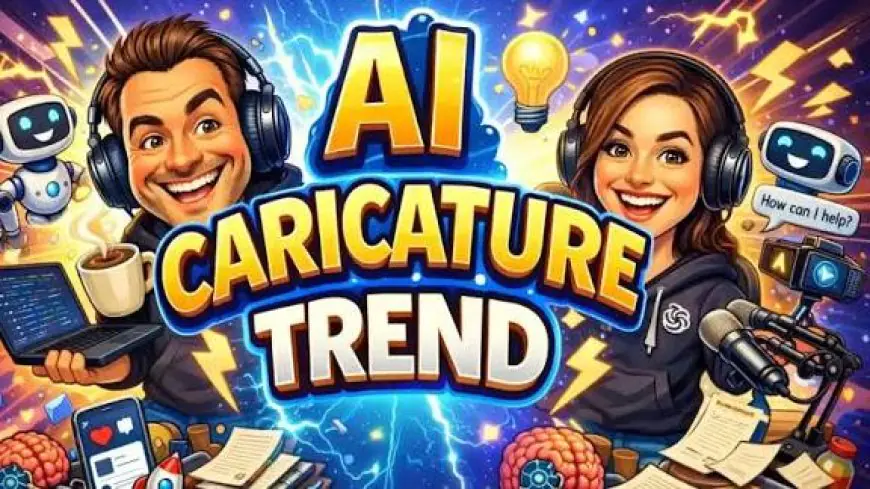
If you have scrolled through Instagram, X (formerly Twitter), or TikTok in the last week, you have likely seen them: highly stylized, often exaggerated AI-generated caricatures of your friends, colleagues, and favorite influencers. The trend—typically involving users uploading a selfie and asking an AI model like ChatGPT to "draw a caricature based on what you know about me"—has exploded in popularity. But as the images flood our feeds, a sharp counter-movement is rising, driven by privacy advocates and climate activists who argue that this fleeting moment of fun comes with a hefty, invisible price tag.
What started as a lighthearted way to test the creative limits of generative AI has morphed into what critics are calling a massive, voluntary data-farming exercise. For the first time, we are seeing a significant cultural pushback where the "wow factor" of AI art is being overshadowed by hard questions about digital footprints and carbon emissions.
"Donating Your Face" for a Laugh
The primary driver of the backlash is privacy. Security experts are raising red flags about the sheer volume of personal data users are handing over to train these models. Unlike previous trends that might have used simple filters, this new wave often requires users to upload high-resolution photos and provide access to chat histories or personal bios to get the "roast" or "caricature" effect.
According to cybersecurity researchers, this behavior normalizes the sharing of sensitive biometric data. When you upload a clear, close-up image of your face to a generative AI platform, you aren't just getting a funny picture back; you are potentially feeding a facial recognition database. Experts warn that these images can be stored, analyzed for biometric markers, and used to refine the very models that could later be used for deepfakes or identity profiling.
Security firms have noted that many users fail to read the fine print regarding data retention. In the rush to join the trend, millions are effectively opting into data usage policies that allow their likenesses to be processed in ways they never explicitly intended. The "creepy" factor is real: when an AI creates a caricature based on "what it knows," it is often pulling from a deep well of behavioral data that users forgot they had even shared.
The Environmental Toll of Vanity
Beyond privacy, the environmental argument against the trend is gaining serious traction. Generative AI is notoriously energy-hungry, and image generation is among the most resource-intensive tasks a model can perform.
Critics are pointing to jarring statistics to illustrate the wastefulness of the trend. Research indicates that generating a single AI image can consume as much energy as fully charging a smartphone. When multiplied by millions of users generating multiple iterations of their caricatures to get the "perfect" one, the collective energy spike is massive.
- Energy consumption: Generating images requires powerful GPUs running at full capacity, drawing significant electricity from grids that are not always green.
- Water usage: Data centers require vast amounts of water for cooling. A viral trend that triggers millions of complex inference requests in a few days puts sudden, intense pressure on this infrastructure.
Social media users are increasingly calling out this disparity, labeling the trend as "climate vandalism" for the sake of vanity. The sentiment is shifting from admiration of the technology to frustration at its frivolous use during a climate crisis.
A Turning Point for AI Culture?
This backlash marks a maturing of the public's relationship with artificial intelligence. We are moving past the "honeymoon phase" where every new capability is celebrated without question. The criticism of the AI caricature trend suggests that users are becoming more literate about the trade-offs of convenience and entertainment.
While the trend shows no sign of vanishing overnight, the conversation has irrevocably changed. The next time a viral prompt asks us to "show us what AI thinks of you," more people might pause and ask: is a five-second laugh worth the privacy risk and the carbon footprint?