































Google's AI Moat is Deeper Than OpenAI's - Here's the Proof
While OpenAI dominated the early headlines of the AI revolution, 2026 has revealed a massive structural advantage for Google. From custom TPU v7 silicon and the landmark Apple-Siri partnership to the native integration of "Project Jarvis" within Chrome, the search giant has built a vertical moat that OpenAI simply cannot match.

The Great Rebalancing of the AI Hegemony
For two years, the tech world was convinced that Google had "lost" the AI race. OpenAI’s ChatGPT was the cultural phenomenon, and Microsoft was the aggressive early adopter. But as we settle into 2026, the narrative has undergone a seismic shift. The initial sprint—centered on who could build the smartest chatbot—has evolved into a marathon of infrastructure, cost-efficiency, and ecosystem distribution. In this new phase, the "Proof" of Google's superiority is no longer in benchmarks, but in its unshakable vertical integration.
Google’s moat is not just a single product; it is a stack. By owning everything from the custom silicon that trains the models to the browser that billions of people use to access them, Alphabet has created a recursive advantage that is leaving "pure-play" AI labs like OpenAI fighting for air. Let’s break down the three pillars of proof that define this new reality.
1. The Silicon Moat: TPU v7 vs. The "Nvidia Tax"
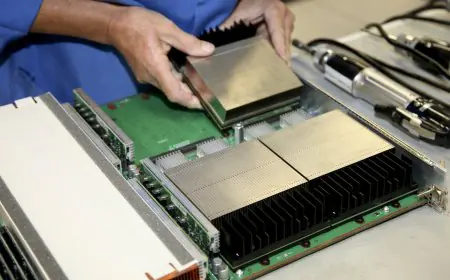
The most immediate proof of Google’s deeper moat is the cost of intelligence. While OpenAI is forced to navigate a precarious dependency on Nvidia’s GPUs and Microsoft’s Azure cloud, Google has spent a decade perfecting its own Tensor Processing Units (TPUs). In early 2026, the rollout of TPU v7 (codenamed Ironwood) has changed the math of the industry.
According to recent analysis, the TPU v7 has reduced inference costs per token by approximately 70%, bringing Google’s absolute cost level essentially on par with—or even slightly below—Nvidia's most advanced GB200 systems. Because Google designs its own chips specifically for its Gemini models, it doesn't pay the "Nvidia Tax" that plagues OpenAI's margins. When inference becomes the primary source of cash flow in late 2026, the company that computes the most cheaply wins. Google isn't just a model builder; it’s a merchant silicon vendor, recently signing massive TPU deals with companies like Anthropic and potentially Meta.
2. The Browser Moat: Chrome vs. Screen Scraping
The "AI Agent Wars" of 2026 have moved beyond text to agency—the ability of an AI to browse the web and complete tasks. OpenAI’s recent release of "Operator" is technically impressive, but it relies on a "Computer Use" model that takes screenshots of your screen to understand where to click. This is slow, resource-heavy, and prone to errors.
Compare this to Project Jarvis (Gemini Auto-Browse). Because Google owns Chrome—a browser with a 65% global market share—Gemini doesn't need to look at your screen. It has direct access to the Document Object Model (DOM) of every website you visit. It sees the underlying code, the buttons, and the navigation menus natively. This allows Gemini to execute multi-step research or shopping tasks with lower latency and higher reliability than any external agent. As noted on Stratechery, the "empire is striking back" through these native browser hooks that OpenAI simply cannot access without building its own rival browser.
3. The Kingmaker Moat: The Apple-Siri Partnership
The ultimate proof of Google's foundational strength arrived in January 2026 when Apple officially selected Google Gemini 3.0 to power the next generation of Siri. For years, OpenAI’s ChatGPT was the primary partner for "Apple Intelligence," but the relationship hit a ceiling. Apple reportedly determined that the scalability of Google’s infrastructure was necessary to support the multi-step reasoning tasks required for its two billion active devices.
This "Kingmaker" deal is worth an estimated $1 billion annually in licensing fees. More importantly, it ensures that Google Gemini is the default intelligence layer for both Android and iOS. While OpenAI is now pivoting to build its own AI hardware to avoid being "just an app," Google has successfully integrated its models into the backbone of every major mobile platform on Earth. As detailed in a recent report from Mashable, Google’s integration story is now its most powerful weapon in the battle for consumer mindshare.
Conclusion: The Full-Stack Winner
OpenAI remains the frontier innovator, pushing the boundaries of what a model can think. However, thinking isn't enough in 2026. The winner of the AI race is the company that can think, act, and scale at the lowest possible cost. With its custom silicon, its dominant browser, and its massive ecosystem of over two billion users, Google has proven that a deep, vertical moat is the only way to survive the coming consolidation of the AI industry.