

































AI Heavyweights Clash: Google’s Demis Hassabis and Meta’s Yann LeCun Spar Over the Reality of AGI
A high-profile intellectual feud has erupted between Google DeepMind CEO Demis Hassabis and Meta’s Chief AI Scientist Yann LeCun over whether "general intelligence" actually exists, exposing a deep philosophical rift between the world’s leading AI labs.


A Battle of AI Titans
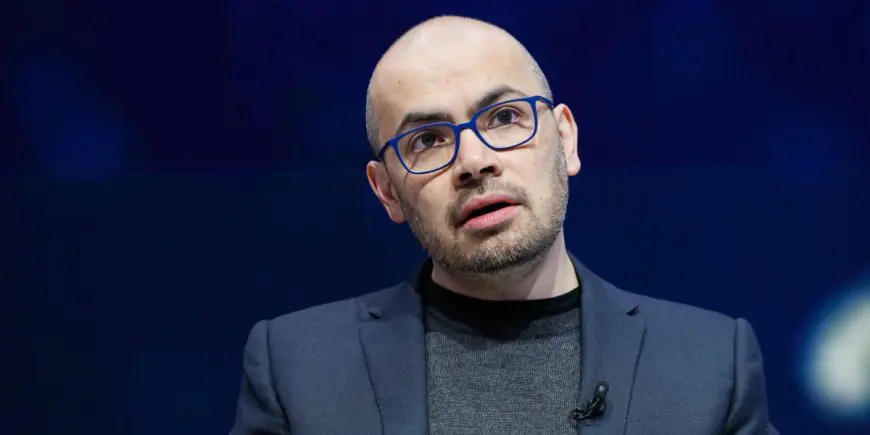
The tech world is witnessing a rare public showdown between two of its most brilliant minds. Demis Hassabis, the CEO of Google DeepMind, and Yann LeCun, the Chief AI Scientist at Meta, have engaged in a heated debate over the very definition and existence of Artificial General Intelligence (AGI). The dispute, which spilled over onto social media platform X, has quickly become the talk of Silicon Valley, drawing in other heavyweights like Elon Musk.
The spark for the fire was a recent podcast appearance by LeCun, where the Turing Award winner argued that "general intelligence" is essentially a myth. LeCun posited that human intelligence is actually "super-specialized" for the physical world and social interactions. According to him, what we perceive as "general" is merely an illusion caused by our inability to imagine the vast number of problems our brains are simply not wired to solve. He famously dismissed the pursuit of human-level AGI as a "fool's errand" if based on current large language model (LLM) architectures.
Hassabis Fires Back: "Plain Incorrect"
Hassabis, a fellow Nobel laureate, did not take the critique lying down. In a rare public rebuke, he called LeCun’s stance "plain incorrect," arguing that the Meta scientist was confusing general intelligence with universal intelligence. Hassabis maintains that while no finite system can solve every possible problem, the human brain is the most flexible and general learning system known to science.
“Brains are the most exquisite and complex phenomena we know of in the universe,” Hassabis wrote, defending the idea that AI foundation models are "approximate Turing Machines" capable of learning anything computable. As reported by The Times of India, Hassabis emphasized that humans' ability to invent things as disparate as chess, 747 airplanes, and quantum mechanics is proof of a fundamental generality that transcends biological niches.
The Philosophical Rift: Scale vs. Structure
This isn't just a spat over semantics; it reflects a core disagreement on how to build the future of AI. The two leaders represent opposite ends of the technological spectrum:
- The Google Approach: Under Hassabis, DeepMind continues to bet that scaling up current models, combined with specific breakthroughs in reasoning and planning, will eventually lead to AGI.
- The Meta Approach: LeCun has repeatedly called LLMs a "dead end" for true intelligence. He advocates for "World Models"—systems that learn how the physical world works through observation, much like a human child, rather than just predicting the next word in a sentence.
The debate even caught the attention of Elon Musk, who sided firmly with the Google chief, stating simply on X that "Demis is right." This public alignment is notable given Musk’s own competitive ventures in the space, such as xAI. For more on how these shifts are impacting the industry, see our coverage on AI market leadership.
Why It Matters for the Industry
As we head into 2026, these divisions suggest that the road to AGI is far more fractured than the hype might suggest. If LeCun is right, the billions currently being poured into massive data centers and LLM training might hit a wall sooner than expected. If Hassabis is correct, we are on the precipice of a general-purpose technology that will transform every sector of the global economy.
For now, the two pioneers remain at an impasse. LeCun doubled down on his position, arguing that human brains are "horribly inefficient" at the vast majority of computational problems, making us specialized by default. The debate serves as a stark reminder that while the AI race is moving at breakneck speed, the scientists leading the charge still haven't agreed on exactly where the finish line is.