



























"Vibe Coding" Warning: Cursor CEO Says AI Over-Reliance Could Topple Software Foundations
Michael Truell, CEO of the AI coding platform Cursor, warns that the rising trend of "vibe coding"—relying on AI to build software without reviewing the underlying logic—creates "shaky foundations" that could lead to catastrophic system failures.


The Rise of "Vibe Coding" and Its Hidden Dangers
As artificial intelligence continues to revolutionize the tech industry, a new phenomenon known as "vibe coding" has taken the developer community by storm. The term, popularized by figures like OpenAI co-founder Andrej Karpathy, refers to a style of programming where developers—or even non-technical users—describe a high-level vision and let AI handle the end-to-end execution. While this has led to a massive surge in productivity, Michael Truell, the CEO and co-founder of the AI-powered code editor Cursor, is sounding a public alarm.
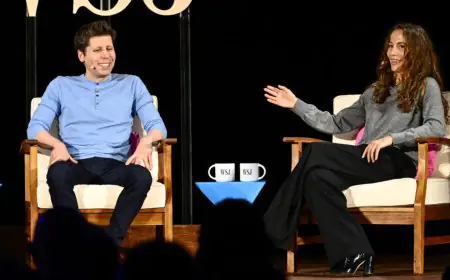
Speaking recently at the Fortune Brainstorm AI conference, Truell cautioned that "fully giving in to the vibe" might be creating a ticking time bomb for the software industry. He argued that when developers stop reading, testing, and understanding the code that AI produces, they are effectively building digital structures on hollow ground. According to reports from The Hans India, Truell believes this lack of discipline could eventually cause even the most ambitious software systems to "crumble."
The Construction Analogy: Building Without a Blueprint
To illustrate the gravity of the situation, Truell used a construction analogy that has resonated across Silicon Valley. "If you were vibe coding, you would close your eyes and just ask for a house to be built," he explained during a panel. "You wouldn’t examine the foundations, you wouldn’t look under the floorboards, and you wouldn’t look at the wiring."
In the short term, this approach yields impressive results. A developer can spin up a functional prototype in minutes that might have previously taken weeks. However, as the system grows and more "floors" are added to the house, the hidden flaws in the wiring and the structural supports become critical. Truell warns that for production-grade enterprise software, this neglect leads to technical debt that becomes impossible to manage, eventually resulting in systems that are fragile, insecure, and unscalable.
The Productivity Paradox: Speed vs. Quality
The allure of AI coding is undeniable. Industry data suggests that at tech giants like Google and Microsoft, upwards of 25% to 30% of new code is now generated by AI. Some leaders have even claimed that AI allows 10 engineers to do the work of 100. However, this volume of output comes with a measurable cost. Recent studies from 2025 highlight that while AI ships code faster, it often "crashes harder."
- Increased Bug Density: Recent research indicates that AI-generated pull requests can contain up to 70% more bugs than those written by humans.
- Security Vulnerabilities: Automated tools often lack the "technical intuition" to avoid common security pitfalls, such as improper password handling or insecure object references.
- Code Churn: The rate of "code churn"—where code is discarded shortly after being written—is projected to double as teams struggle to integrate mismatched AI snippets into existing architectures.
Truell’s own platform, Cursor, is currently valued at nearly $30 billion and is at the forefront of the AI coding movement. Yet, he maintains that the tool's purpose is to assist the engineer, not to replace the critical thinking required for software architecture. He emphasized that the best developers use AI to dive deeper into details and debug faster, rather than detaching from the logic entirely.
Maintaining the Craft in an AI World
The warning from the Cursor CEO serves as a call to action for engineering leaders to re-prioritize "engineering rigor." As AI tools become more sophisticated, the role of the developer is shifting from a writer of syntax to a high-level reviewer and architect. Experts suggest that "vibe coding" might be suitable for rapid prototyping or small hobby projects, but it should never be the standard for critical infrastructure.
As Fortune and other industry outlets have noted, the future of software development depends on finding a balance between the speed of automation and the reliability of human oversight. If the industry fails to heed these warnings, the "vibe" of today’s rapid innovation could lead to a future of digital instability.