





































DeepSeek Disrupts Silicon Valley’s AI Landscape
DeepSeek's rise as a formidable AI competitor has transformed Silicon Valley’s landscape, challenging established norms and prompting significant market shifts.

DeepSeek, a Chinese startup founded in 2023, has dramatically reshaped the artificial intelligence (AI) landscape in Silicon Valley with its innovative and cost-effective AI models. The company’s recent launch of its generative AI model, DeepSeek V3, has not only matched the capabilities of leading models like OpenAI's ChatGPT but has done so at a fraction of the cost. This breakthrough has sent shockwaves through the tech industry, leading to significant market repercussions and a reevaluation of competitive strategies among established American firms.


The Rise of DeepSeek
DeepSeek emerged from High-Flyer, a hedge fund that initially focused on using AI for stock market predictions. Following regulatory changes in China that affected speculative trading, the firm pivoted to advanced AI research. By leveraging a stockpile of Nvidia chips and employing less expensive alternatives, DeepSeek developed its models with remarkable efficiency. The development costs for its flagship model were reported to be around $6 million, compared to billions spent by its American counterparts like OpenAI and Google[1].
Market Impact
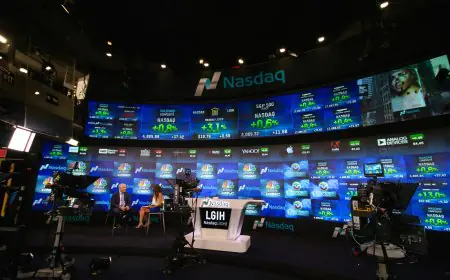
The introduction of DeepSeek's technology has led to an unprecedented reaction in the financial markets. Following its launch, U.S. tech stocks suffered a staggering loss of nearly $1 trillion in value within a single day. Nvidia alone saw its market capitalization plummet by $589 billion—the largest one-day loss for any company in history—prompting fears that American firms could be outpaced by Chinese innovations[2].
This shift represents a significant departure from the prevailing belief that substantial financial investment and access to advanced technology were prerequisites for success in AI development. As noted by Marc Andreessen, a prominent Silicon Valley investor, this moment is akin to a "Sputnik moment," indicating that China is now a serious contender in the global tech race[3].
A New Paradigm in AI Development
DeepSeek's approach challenges traditional notions about resource allocation in AI development. While major U.S. firms typically rely on extensive data centers and vast computational resources, DeepSeek has demonstrated that efficiency can yield competitive models without requiring massive investments. The company’s use of Multi-Head Latent Attention (MLA) and Mixture-of-Experts (MoE) structures allows it to achieve high performance while minimizing operational costs.
Moreover, DeepSeek has adopted an open-source model for its technology, making it accessible to developers worldwide. This strategy not only democratizes access to advanced AI but also encourages innovation across various sectors. In contrast to the proprietary models of companies like OpenAI and Google, which are often shrouded in secrecy, DeepSeek's transparency fosters collaboration and rapid advancements within the AI community.
Implications for Silicon Valley
The emergence of DeepSeek signifies a pivotal moment for Silicon Valley as it grapples with the implications of this new competitor. Companies are now reassessing their strategies in light of DeepSeek’s success; there is growing recognition that merely outspending rivals may no longer guarantee dominance in the AI sector[4]. As Zack Kass, an AI consultant, pointed out, the paradigm is shifting towards developing practical applications while reducing costs and resource consumption.
DeepSeek's disruptive entry into the AI market has not only altered the competitive landscape but also sparked critical discussions about the future direction of artificial intelligence development. As this dynamic unfolds, both established players and new entrants will need to adapt to an environment where innovation can emerge from unexpected sources at unprecedented speeds.