






















Concerns Raised by OpenAI and Anthropic over Safety Culture at Elon Musk’s xAI
OpenAI and Anthropic raised awareness in the wake of Grok’s recent failures.
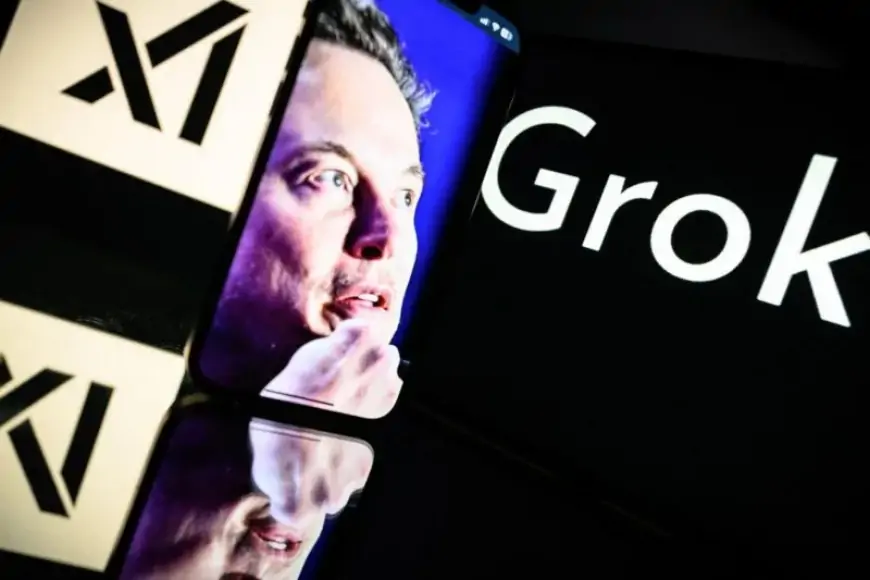
In the race to dominate AI, any slip up is an opportunity for rivals to take advantage. In line with that, AI safety researchers from OpenAI, Anthropic, and other organizations are speaking out publicly against the “reckless” and “completely irresponsible” safety culture at xAI, the billion-dollar AI startup owned by Elon Musk.

Grok Called Out
Criticisms have followed weeks of scandals at xAI that have overshadowed the company’s technological advances.
Last week, the company’s AI chatbot, Grok, spouted antisemitic comments and repeatedly called itself “MechaHitler.” Shortly after xAI took its chatbot offline to address the problem, it launched an increasingly capable frontier AI model, Grok 4, which was found to consult Elon Musk’s personal politics for help answering hot-button issues. In the latest development, xAI launched AI companions that take the form of a hyper-sexualized anime girl and an overly aggressive panda.
Friendly joshing among employees of competing AI labs is fairly normal, but these researchers seem to be calling for increased attention to xAI’s safety practices, which they claim to be at odds with industry norms.
“I didn’t want to post on Grok safety since I work at a competitor, but it’s not about competition,” said Boaz Barak, a computer science professor currently on leave from Harvard to work on safety research at OpenAI, in a Tuesday post on X. “I appreciate the scientists and engineers at xAI but the way safety was handled is completely irresponsible.”
Barak particularly takes issue with xAI’s decision to not publish system cards — industry standard reports that detail training methods and safety evaluations in a good faith effort to share information with the research community. As a result, Barak says it’s unclear what safety training was done on Grok 4.
Competitors are Faulty, too
OpenAI and Google have a spotty reputation themselves when it comes to promptly sharing system cards when unveiling new AI models. OpenAI decided not to publish a system card for GPT-4.1, claiming it was not a frontier model. Meanwhile, Google waited months after unveiling Gemini 2.5 Pro to publish a safety report. However, these companies historically publish safety reports for all frontier AI models before they enter full production.
Barak also notes that Grok’s AI companions “take the worst issues we currently have for emotional dependencies and try to amplify them.” In recent years, we’ve seen countless stories of unstable people developing concerning relationships with chatbots, and how AI’s over-agreeable answers can tip them over the edge of sanity.
Samuel Marks, an AI safety researcher with Anthropic, also took issue with xAI’s decision not to publish a safety report, calling the move “reckless.”
“Anthropic, OpenAI, and Google’s release practices have issues,” Marks wrote in a post on X. “But they at least do something, anything to assess safety pre-deployment and document findings. xAI does not.”
The reality is that we don’t really know what xAI did to test Grok 4, and the world seems to be finding out about it in real time. Several of these issues have since gone viral, and xAI claims to have addressed them with tweaks to Grok’s system prompt.
Rebuttals
Dan Hendrycks, a safety adviser for xAI and director of the Center for AI Safety, posted on X that the company did “dangerous capability evaluations” on Grok 4, indicating that the company did some pre-deployment testing for safety concerns. However, the results of those evaluations have not been publicly shared.
“It concerns me when standard safety practices aren’t upheld across the AI industry, like publishing the results of dangerous capability evaluations,” said Steven Adler, an independent AI researcher who previously led dangerous capability evaluations at OpenAI, in a statement to TechCrunch. “Governments and the public deserve to know how AI companies are handling the risks of the very powerful systems they say they’re building.”
What’s interesting about xAI’s questionable safety practices is that Musk has long been one of the AI safety industry’s most notable advocates. The billionaire owner of xAI, Tesla, and SpaceX has warned many times about the potential for advanced AI systems to cause catastrophic outcomes for humans, and he’s praised an open approach to developing AI models.
And yet, AI researchers at competing labs claim xAI is veering from industry norms around safely releasing AI models. In doing so, Musk’s startup may be inadvertently making a strong case for state and federal lawmakers to set rules around publishing AI safety reports.