

















14-year Old Indian-American Harnesses AI to Detect Cardiac Issues
The teenager has received praise from Barack Obama and Joe Biden for his discovery.
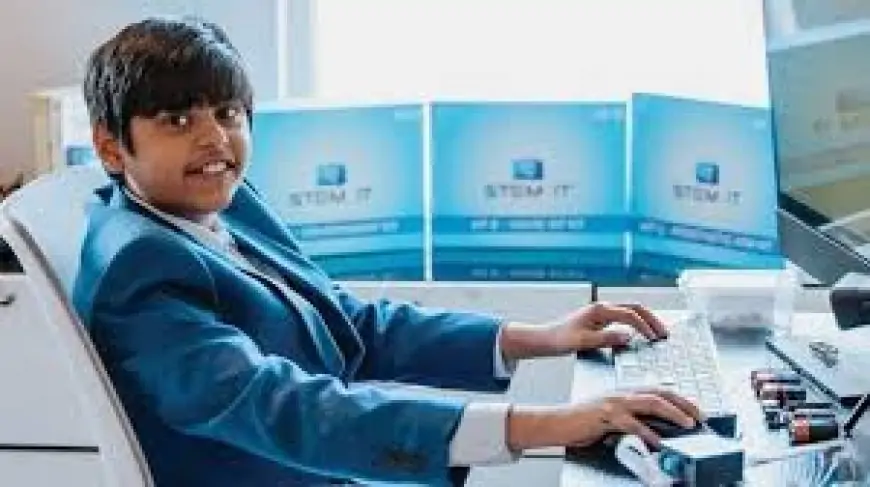
14-year-old Indian-American Siddarth Nandyala has founded two companies, STEM IT and Circadian AI, and believes innovation is the heartbeat of progress. He claims his favorite book is TinyML by Daniel Situnayke and Pete Warden, while his favorite TV show is Young Sheldon.

The young prodigy recalls receiving his first STEM kit. “I was seven…and I fell in love instantly,” said the 14-year-old Indian-American credited with creating an AI-powered app that can detect heart diseases in seconds. “The idea of creating something out of nothing completely fascinated me — it sparked a curiosity that has not left since,” he added.
AI Discoveries
Talking about his maiden venture, Siddarth admitted that STEM IT was born from frustration, saying traditional learning materials do not offer students a comprehensive understanding of the technological field. “They teach surface-level theory but fail to show students how things work in the real world. With STEM IT, I wanted to bridge that gap—giving students hands-on tools to experiment, build, and understand the systems behind our tech-driven world,” he said.
As for his second venture, Circadian AI, Siddarth said that he pursued it after he realised its life-saving potential when it was deployed in underprivileged communities and “began detecting cardiovascular diseases in patients who did not even know they were sick”.
“That moment—seeing someone’s future change in seconds—made me realise we were not just building software. We were building second chances,” Siddarth said about his motivation to proceed with the groundbreaking technology.
How does Circadian AI Work?
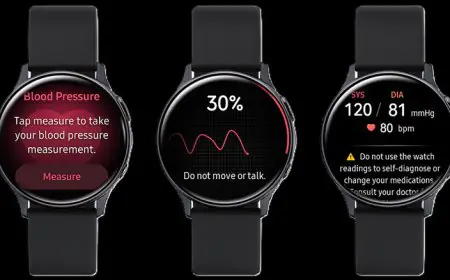
Circadian AI is an AI-powered tool that can help detect heart disease early using just heart sounds. “You simply place a smartphone on the patient’s 5th intercostal space (that’s roughly at the chest area, under the left nipple), have the person sit down, and then record the heart sound through the app. After clicking ‘analyze, ’ the app processes the sound and gives a heart health report,” explained Siddarth.
Circadian AI was recently tested at the Guntur Government General Hospital (GGH) in Andhra Pradesh. Siddarth demonstrated the real-world use of the app in detecting cardiac conditions with accuracy. He ran two separate pilot studies at two points of care at the hospital. While the first screened 505 patients, detecting cardiovascular diseases (CVD) in 10, the second study screened 863 patients, detecting 16 cases with CVDs.
Patients who were flagged by the Circadian AI were later sent for ECG and 2D echo screening and were eventually reviewed by a cardiologist. A similar demo was also conducted at GGH Vijayawada, where 992 people were screened, of which 19 were detected to have CVDs.
Starting Out
According to Siddarth, the development of the application took him seven months, which included data collection or gathering heart sound samples, training the AI model, building the mobile interface, and clinical validation by running real-world tests in hospital settings to ensure high accuracy.
Asked how soon Circadian AI can be made available in the public domain, Siddarth said it is only meant for clinical screening. “ It is not meant for public use…The tool is designed to be used in a hospital setting,” he explained.
Asked about the key considerations young innovators should keep in mind when developing AI-driven health solutions, Siddarth said that ethics has to be at the core. “It is essential to think about how the model was trained, what populations it represents, and whether the output is explainable to both the doctor and the patient. The model is only as good as the data that has been used to train it,” he said.
Siddarth predicted that in the next decade, AI-powered diagnostics will become more hyper-personalised and more accessible, especially in areas where health infrastructure is limited. “