
































Nvidia and OpenAI Pursue Smaller Equity Investment as 100 Billion Deal Stalls
The historic $100 billion infrastructure partnership between Nvidia and OpenAI has hit a major snag as internal skepticism at Nvidia grows. Talks have now shifted toward a smaller equity-focused investment, marking a strategic cooling in the race for massive AI scaling.


A Strategic Cooling in Silicon Valley’s Largest Bet
Just months after the tech world was set ablaze by the prospect of a $100 billion "infrastructure-first" alliance, the groundbreaking deal between Nvidia and OpenAI appears to have reached a stalemate. As of late January 2026, the ambitious roadmap aimed at deploying ten gigawatts of AI compute capacity is being fundamentally re-evaluated. What was once envisioned as a singular, era-defining megadeal has reportedly hit a "pause" button, with discussions now pivoting toward a much more traditional—and significantly smaller—equity investment.
The shift represents a notable change in temperament for an industry that has, for the last two years, operated on a "blank check" philosophy. While OpenAI still requires massive capital to fuel its reasoning models and data center expansions, Nvidia’s leadership is beginning to exercise a level of fiscal caution that has surprised some observers. The focus is no longer on a guaranteed $100 billion infrastructure offtake, but rather on an equity stake worth tens of billions, reflecting a maturing relationship between the chip giant and its most prominent customer.
Internal Skepticism and the "Vera Rubin" Reality Check
The primary driver behind this sudden de-escalation appears to be coming from within Nvidia itself. According to a report by The Star, citing the Wall Street Journal, several key figures inside the chip giant have expressed growing doubts about the sheer scale of the commitment. Committing $100 billion to a single entity—even one as dominant as OpenAI—creates a concentration of risk that is becoming difficult for Nvidia’s board to swallow as the competitive landscape for AI hardware begins to diversify.
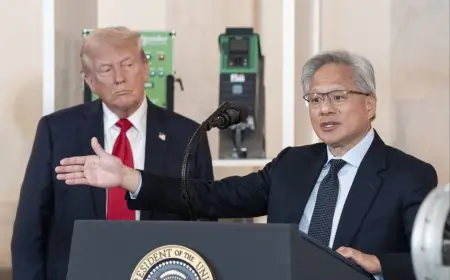
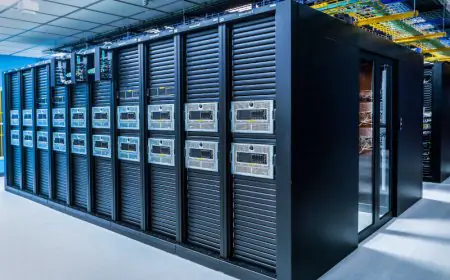
Furthermore, the logistical hurdles of the original deal were immense. The plan was heavily tied to the rollout of Nvidia’s Vera Rubin platform, which requires not only millions of GPUs but also unprecedented access to power grids and water for cooling. As physical constraints on data center buildouts become more apparent, the "Stargate" vision of 10-gigawatt AI factories is being forced to align with the reality of current infrastructure limitations. Consequently, Nvidia CEO Jensen Huang has recently publicly downplayed the likelihood of the original, massive deal moving forward in its initial form.
OpenAI’s Search for the "Trillion-Dollar" Bridge
For Sam Altman and OpenAI, the stalling of this particular deal comes at a high-pressure moment. The company’s projected cash burn for 2026 is estimated to be in the tens of billions of dollars, and the race to achieve Artificial General Intelligence (AGI) requires a continuous, massive influx of liquidity. While a "smaller" equity deal from Nvidia would still likely be one of the largest in tech history, it leaves a significant funding gap that Altman will need to fill through other partners.
Currently, OpenAI is reportedly in parallel talks with Microsoft, Amazon, and several sovereign wealth funds in the Middle East to raise a combined $60 billion to $100 billion. As noted by The Economic Times, the participation of Amazon as a new potential major investor adds a layer of complexity to the talks, as it could signal a shift in OpenAI’s historical exclusivity with Microsoft’s Azure platform. In this multi-polar environment, Nvidia’s pivot to equity rather than infrastructure allows it to remain a partner to all while avoiding being too deeply enmeshed in the fate of just one.
The Future of "Circular" AI Financing
Analysts are watching this development as a potential bellwether for the broader AI market. For much of 2024 and 2025, the industry relied on "circular" financing models where chip makers invested in software companies that then used those funds to buy more chips. The cooling of the Nvidia-OpenAI megadeal suggests that regulators and institutional investors are demanding a move toward more sustainable, transparent investment structures.
By opting for a smaller equity stake, Nvidia retains its influence over OpenAI's roadmap and ensures its chips remain the "preferred silicon" for future models, but it does so without tying up $100 billion of its balance sheet in a singular, high-risk infrastructure play. This pragmatic approach allows Nvidia to stay nimble as competitors like AMD and even internal chip projects from Amazon and Google try to chip away at its dominance.
Conclusion
The "scaling back" of the Nvidia-OpenAI deal is far from a sign of failure; rather, it is a sign of a market that is finally catching its breath. The shift to a smaller equity investment proves that even the giants of Silicon Valley must eventually answer to the laws of financial gravity and physical infrastructure. As the first phase of the AI gold rush concludes, the focus is moving from "how much can we spend" to "how wisely can we invest." For OpenAI, the search for the next hundred billion continues—but it will likely come from a broader, more diversified group of backers than originally thought.