































AI Battlefield Navigating Ethics and International Governance
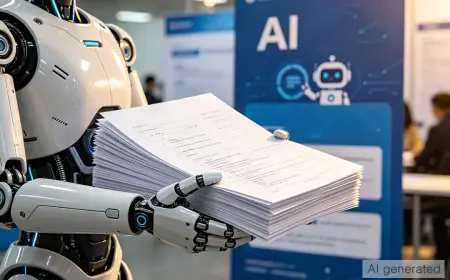
We will be exploring the complex interplay between AI and warfare, stressing ethical concerns, governance frameworks, and the United Nations' position on the use of AI in military operations.
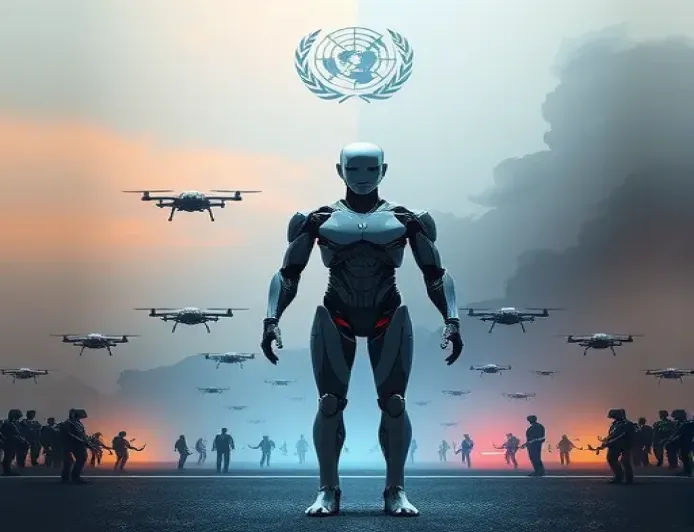
The AI Battlefield: Navigating Ethics and International Governance
In the ever-evolving landscape of modern warfare, Artificial Intelligence (AI) has emerged as a potent tool, capable of revolutionizing military strategies and operations. The question of whether AI in warfare should be encouraged is complex, deeply entwined with ethical considerations, legal frameworks, and international governance. This article delves into the current United Nations positions on AI use in battles, highlighting both the potential benefits and the profound ethical challenges.

The Double Edge of AI: Efficiency vs. Ethics
AI has the potential to transform warfare by making it more efficient, accurate, and surgical. For instance, AI can analyze vast amounts of data in real-time, identify targets with greater precision, and optimize logistics and supply chain management. These capabilities could significantly reduce collateral damage and minimize the risk of harm to both soldiers and civilians. However, this efficiency comes at a cost: the erosion of human judgment and decision-making.
Ethical Concerns: Bias, Accountability, and Human Dignity
The integration of AI into military decision-support systems raises significant ethical concerns. AI-based systems can foster biases if the training data includes discriminatory patterns, potentially leading to unfair outcomes in the heat of battle. Moreover, the opacity of AI systems makes it difficult for humans to understand or challenge their suggestions, compromising transparency and accountability. This can undermine the core principles of military ethics, where commanders must bear moral responsibility for their decisions.
The Human Element: Commanders and Moral Responsibility
Traditionally, military decisions are made by human commanders who weigh the consequences of their actions on both their soldiers and civilians. The use of AI-based decision-support systems (DSS) could dilute this human element by reducing lives to mere data points in an algorithmic equation. This dehumanization obscures the moral significance of choices being made, potentially leading to a loss of meaningful human control over the battlefield.
United Nations Positions: Balancing Benefits and Risks
The United Nations has taken a multifaceted approach to addressing the use of AI in warfare. In a recent Security Council debate, Secretary-General António Guterres emphasized the need for unprecedented global cooperation to mitigate the risks associated with AI governance. He underscored that AI should not stand for "Advancing Inequality," emphasizing the importance of supporting developing countries in building their AI capabilities.
The UN General Assembly has also called upon Member States to bridge divides regarding responsible AI use in the military domain. By a recorded vote of 165 in favor to 2 against, with 6 abstentions, the Assembly resolved to encourage cooperation on a voluntary basis for sharing knowledge and best practices with developing countries.
Current International Governance: From Agreements to Regulations
In efforts to govern the use of AI in warfare, international agreements and regulations are being forged. Recent discussions among over 60 nations have resulted in a blueprint for ethical and human-centric AI applications in the military. This agreement addresses issues like risk assessments, human control, and the use of AI for weapons of mass destruction. While nations like the United States, the Netherlands, South Korea, and the United Kingdom have signed on to these principles, notable holdouts exist, such as China.
Ethics of Automated Warfare: The Need for Guardrails
The ethics of automated warfare are complex and multifaceted. The integration of AI without human oversight raises significant concerns about accountability and the potential for unintended consequences. For instance, algorithms used in intelligence assessments and target selection can lead to life-and-death decisions without adequate human oversight. Delegating decisions to machines creates fundamental ethical, legal, and political questions, particularly concerning the use of force.
Looking Ahead: A Future of Responsible AI Use
As the world grapples with the rapid advancement of AI technologies, it is crucial to establish clear guardrails around their use in warfare. Embedding ethical considerations into AI development is essential, as highlighted by UNESCO's AI Ethics Declaration. The integration of AI with nuclear weapons must be avoided at all costs, as emphasized by UN officials.
While AI has the potential to transform modern warfare by making it more efficient, the ethical challenges associated with its use cannot be overlooked. The current United Nations positions advocate for responsible AI governance, emphasizing the need for cooperation, ethical considerations, and human oversight. As nations move forward, it is imperative to balance the benefits of AI with the risks, ensuring that these technologies are used to enhance human dignity rather than diminish it.