












































Can Artificial Intelligence Revive Journalism or Undermine It?
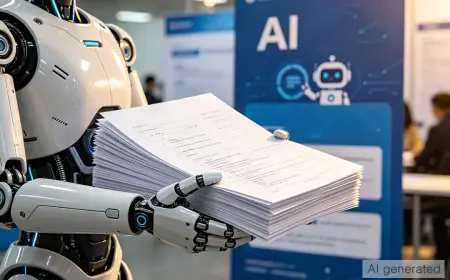
AI is reshaping journalism by enhancing efficiency and personalization, but questions about ethics, autonomy, and misinformation persist. Will it save the news industry or deepen existing challenges?

Artificial intelligence is revolutionizing journalism, offering unprecedented opportunities to enhance efficiency, expand storytelling methods, and personalize content delivery. Yet, it also raises critical questions about ethics, autonomy, and the role of human journalists in the rapidly evolving media landscape.


AI's impact on journalism can already be seen in newsrooms worldwide. Tools like The Washington Post’s Heliograf automate simple reporting tasks such as sports summaries and earnings reports, freeing journalists to focus on investigative work. Reuters’ News Tracer leverages AI to monitor social media for breaking news. These applications highlight AI's ability to streamline processes and improve accuracy in data-driven journalism.
Generative AI models are also reshaping how news is consumed. Platforms like Google’s generative search provide users with concise answers to complex queries, often bypassing traditional news sites altogether. While this technology can combat misinformation by providing verified answers, it also risks fragmenting shared public knowledge and reducing audience engagement with established media outlets.
Despite these advancements, AI's integration into journalism is not without challenges. Concerns about bias in AI systems and the loss of editorial discretion are mounting. As AI becomes more embedded in content creation and distribution, news organizations increasingly depend on technology companies for infrastructure and tools. This reliance creates "lock-in effects," limiting publishers' autonomy and exposing them to potential price hikes or shifting priorities from tech giants.
Moreover, AI's role in journalism could exacerbate inequalities within the industry. Well-funded international publishers are better positioned to invest in AI-driven tools, leaving smaller local outlets struggling to compete. This dynamic risks deepening existing disparities between global media powerhouses and local news organizations, particularly in underserved regions like the Global South.
Ethical concerns are also at the forefront of discussions around AI in journalism. The automation of news creation raises questions about accountability and transparency. For example, Elon Musk’s X.AI-powered "Stories" system generates personalized narratives for users based on social media activity but lacks verification processes or archival permanence. Such innovations could democratize access to information but also threaten traditional journalistic norms by prioritizing speed over accuracy.
Ultimately, whether AI will save the news industry or undermine it depends on how it is implemented. Newsrooms must balance efficiency gains with ethical considerations and invest in training journalists to use AI responsibly. The technology has the potential to empower investigative reporting and make data journalism accessible to smaller outlets. However, without careful oversight, it could deepen polarization and erode trust in media institutions.
As the industry navigates this transformative era, one thing is clear: AI alone cannot replace the human judgment essential for quality journalism. Its success lies in complementing—rather than supplanting—the work of journalists dedicated to uncovering truth and fostering informed societies.