










































Trump Unveils Data Center Revolution with $20 Billion Plan to Transform US Digital Landscape
President-elect Donald Trump announces a $20 billion plan to establish new data centers across the U.S., aiming to revolutionize data storage and foster technological advancement, particularly in AI and cloud technologies.

A New Era for Data Centers
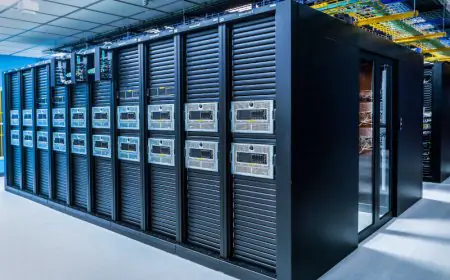
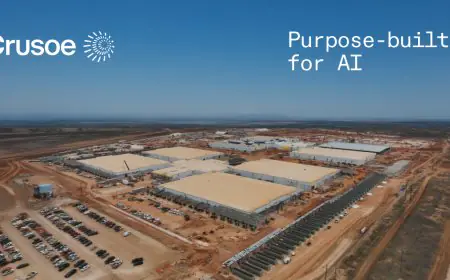
President-elect Trump's announcement, made during a press conference at his Mar-a-Lago home in Palm Beach, Florida, marked a significant milestone in the nation's quest to become a global leader in digital infrastructure. The first phase of this multi-year initiative will see data centers spring up in key locations such as Arizona, Illinois, Indiana, Louisiana, Michigan, Ohio, Oklahoma, and Texas. These centers will primarily serve hyperscale customers, catering to the escalating demands of AI and cloud technologies.


"The U.S. has been waiting for years to increase its investments in the country," Sajwani emphasized. "We're planning to invest $20 billion and potentially even more than that as the opportunity and market allow us." This massive infusion of capital underscores the strategic importance of data centers in supporting the rapid growth of AI systems, which require enormous computing infrastructure to operate at scale.
The Rise of AI: A Catalyst for Data Centers
The advent of generative AI has dramatically increased the size and power requirements of GPU stacks, pushing demand for data center space to new heights. As Alvin Ngyuen, senior analyst at Forrester, noted in recent months, while the demand for data center space is currently at an all-time high, communities are beginning to push back against the resource-heavy computer plants. However, Trump's initiative seeks not only to meet but also to exceed this growing demand.
Microsoft, a major player in the tech industry, has set its sights on a similar scale with its own ambitious plans. The company recently announced it is on track to spend $80 billion on AI data centers, a move that underscores the critical role these facilities play in supporting the development and operation of AI systems.
Trump's Vision: A Business-Friendly Environment
President-elect Trump's announcement has been hailed as a testament to his administration's commitment to creating a business-friendly environment. By promising "expedited reviews" for projects worth over $1 billion, Trump aims to attract more investment and boost economic growth. This strategy is particularly appealing to entrepreneurs and investors looking to capitalize on the burgeoning tech sector.
The incoming U.S. president highlighted the investment as proof of his administration's early success in wooing business investors. "Hussain, we're going to work with you to make sure everything goes smoothly," Trump assured Sajwani during the press conference.
Regulatory Challenges and Future Prospects
While Trump's plan faces significant regulatory hurdles, particularly with regards to the CHIPS Act, industry leaders remain optimistic about its potential. The CHIPS Act, which passed with bipartisan support in 2022, has attracted substantial investment from top chipmakers. However, Trump has threatened to repeal the Act, citing concerns about Taiwan's alleged theft of U.S. chip business and calling for tariffs on imported semiconductors.
Despite these challenges, tech leaders continue to advocate for increased investment in data center infrastructure. As Microsoft President Brad Smith noted in a recent blog post, “Our success depends on new partnerships founded on large-scale infrastructure investments.”
Looking Ahead
Trump's ambitious $20 billion plan to establish new data centers across the U.S. is a bold step towards harnessing the power of AI and cloud technologies. This initiative not only promises to meet but also exceed the growing demands of hyperscale customers but also underscores the strategic importance of creating a business-friendly environment that fosters innovation and growth.
As we move into an era where data is the new oil, this investment will play a pivotal role in ensuring that the U.S. remains at the forefront of technological advancement. With its focus on AI and cloud technologies, this initiative is poised to revolutionize not just the digital landscape but also the very fabric of how we operate in a data-driven world.