







































DeepSeek Disrupts Global AI Race: China’s Cost-Effective Innovation Narrows Tech Divide
Chinese startup DeepSeek’s breakthrough AI models challenge U.S. dominance, leveraging efficiency and open-source strategies to bridge the global tech gap.

China’s AI sector has achieved a seismic shift with DeepSeek’s emergence as a global contender, narrowing the technological divide with Western leaders like OpenAI and Nvidia. The Hangzhou-based startup’s cost-efficient models and strategic open-source approach are reshaping the AI landscape, proving that innovation can thrive under U.S. semiconductor sanctions.


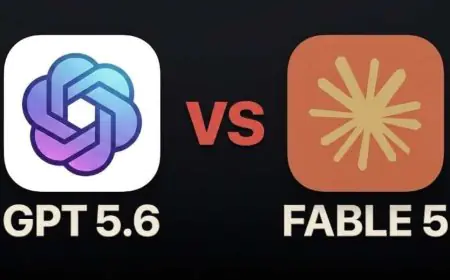
DeepSeek’s R1 model, released in January 2025, stunned the industry by matching OpenAI’s GPT-4o at a fraction of the cost. Trained for just $5.6 million—compared to GPT-4’s $100 million—the model uses mixture-of-experts techniques to reduce computational demands while maintaining performance. This efficiency stems from adapting to U.S. chip export restrictions, which forced Chinese firms to innovate with less advanced hardware.
The company’s V3-0324 model, launched in March, further solidified its position with enhanced reasoning and coding capabilities, outperforming benchmarks in Chinese-language tasks like interactive rewriting and report analysis. By prioritizing practical applications over proprietary licensing, DeepSeek is democratizing access to AI tools, a strategy mirrored by giants like Baidu, which recently open-sourced its Ernie 4.5 model.
DeepSeek’s open-weight models—released under the MIT License—have sparked an “Android moment” in China’s AI ecosystem, accelerating adoption and innovation. Analysts note that this shift could enable broader, more equitable access to AI worldwide, particularly in regions like Africa, where cost barriers have limited progress.
However, the open-source strategy also poses challenges. While it fosters collaboration, it risks fragmenting the market and complicating monetization for startups competing with well-funded rivals.
DeepSeek’s advancements have sent shockwaves through global markets. Nvidia’s stock plummeted after the R1 launch, erasing $600 billion in value—the largest single-day loss in U.S. history—as investors questioned the chipmaker’s reliance on high-end hardware. Meanwhile, Chinese firms like Baidu and ByteDance are leveraging open-source models to counter Western dominance, signaling a broader strategic pivot.
Lee Kai-fu, CEO of 01.AI, attributes China’s progress to U.S. sanctions acting as a “double-edged sword”: while restrictive, they spurred algorithmic innovation and cost-cutting breakthroughs.