









































Microsoft Develops In-House AI Models to Challenge OpenAI's Dominance
Microsoft is shifting its strategy by developing its own AI models, known as MAI, to reduce reliance on OpenAI and enhance its AI capabilities across products like Microsoft 365 Copilot.

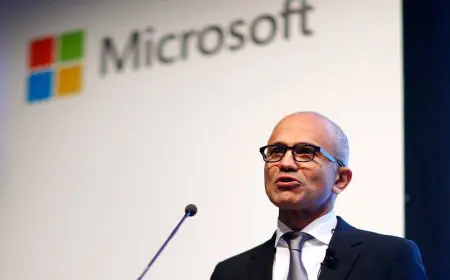
In a bold strategic shift, Microsoft is actively developing its own family of artificial intelligence models, referred to internally as MAI (Microsoft AI), aimed at competing with industry leader OpenAI. This initiative marks a significant departure from Microsoft's previous reliance on OpenAI's technology, particularly the GPT-4 model that powers its flagship product, Microsoft 365 Copilot.


Microsoft's decision to create in-house AI models stems from several key motivations: reducing dependency on OpenAI, enhancing processing speeds, and cutting operational costs. Despite investing approximately $13.75 billion in OpenAI since 2019, Microsoft is exploring alternatives to ensure it maintains flexibility and control over its AI ecosystem. Reports indicate that the company has begun testing various AI models from competitors such as xAI, Meta, and DeepSeek as potential replacements for OpenAI's technology within its products.
The MAI models are designed to tackle complex reasoning tasks and are expected to perform comparably to existing models from OpenAI and Anthropic. These models utilize advanced techniques such as chain-of-thought reasoning, which involves generating answers through intermediate reasoning steps. This approach not only enhances the accuracy of responses but also allows the models to engage in more sophisticated problem-solving.
Microsoft is already experimenting with integrating these new AI models into its Copilot product. The goal is to gradually replace OpenAI's technology with MAI in some instances while also exploring the possibility of offering these models as an application programming interface (API) for external developers later this year. This move could significantly reshape the competitive landscape in the AI sector by providing businesses with more options for integrating AI capabilities into their applications.
While Microsoft remains a key partner of OpenAI, the dynamics of their collaboration have evolved. Recently, Microsoft relinquished its exclusive role as OpenAI's cloud provider, opting instead for a "right of first refusal" agreement that allows OpenAI to seek cloud services from other providers. This change reflects Microsoft's broader strategy to diversify its AI offerings while continuing to leverage its partnership with OpenAI where beneficial.
As Microsoft continues to develop its MAI models and integrate them across its product suite, the impact on the broader AI ecosystem could be profound. If successful, these efforts will not only enhance Microsoft's offerings but also challenge OpenAI's dominance in the market.
Both companies have yet to comment on these developments publicly, but industry experts are closely monitoring how this rivalry will unfold in the coming months.