



















Microsoft Gives OpenAI the Nod to Pivot Its Profit Arm
The plan is still developing, but Microsoft’s blessing shows progress.

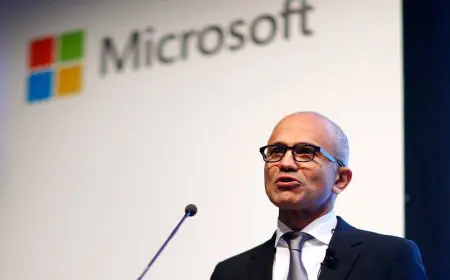
On Thursday, OpenAI announced it reached a nonbinding agreement with Microsoft, its largest investor, on a revised partnership that would allow the startup to convert its for-profit arm into a public benefit corporation (PBC).

The transition is subject to state regulators, but it could allow OpenAI to raise additional capital from investors and, eventually, become a public company.
According to OpenAI board chairman Bret Taylor, under the nonbinding agreement with Microsoft, OpenAI’s nonprofit would continue to exist and retain control over the startup’s operations. OpenAI’s nonprofit would obtain a stake in the company’s PBC, worth upward of $100 billion, Taylor said. Further terms of the deal were not disclosed.
“Microsoft and OpenAI have signed a nonbinding memorandum of understanding (MOU) for the next phase of our partnership,” the companies said in a joint statement. MOUs are not legally binding but aim to document each party’s expectations and intent.
“We are actively working to finalize contractual terms in a definitive agreement,” the joint statement added.
The development seems to mark an end to months of negotiations between OpenAI and Microsoft over the ChatGPT maker’s transition plans. Unlike most startups, OpenAI is controlled by a nonprofit board. The unusual structure allowed OpenAI board members to fire CEO Sam Altman in 2023. Altman was reinstated days later, and many of the board members resigned. However, the same governance structure remains in place today.
Under their current deal, Microsoft is supposed to get preferred access to OpenAI’s technology and be the startup’s primary provider of cloud services. However, ChatGPT is a much larger business than when Microsoft first invested in the startup back in 2019, and OpenAI has reportedly sought to loosen the cloud provider’s control as part of these negotiations.
In the last year, OpenAI has struck a series of deals that would allow it to be less dependent on Microsoft. OpenAI recently signed a contract to spend $300 billion with cloud provider Oracle over a five-year period starting in 2027, according to the Wall Street Journal. OpenAI has also partnered with the Japanese conglomerate SoftBank on its Stargate data center project.
Microsoft has also made moves to develop its own AI infrastructure, while exploring working relationships with OpenAI’s rivals like Anthropic.