








































Nvidia GPU and AI Supremacy Faces Challenge as China Unveils Advanced 14nm AI Chip with 3D Hybrid Bonding
China's new 14nm AI chip with 3D hybrid bonding offers 120 teraflops of processing power, presenting a strategic architectural shift that could disrupt Nvidia's GPU dominance and signal a new era in AI hardware innovation.
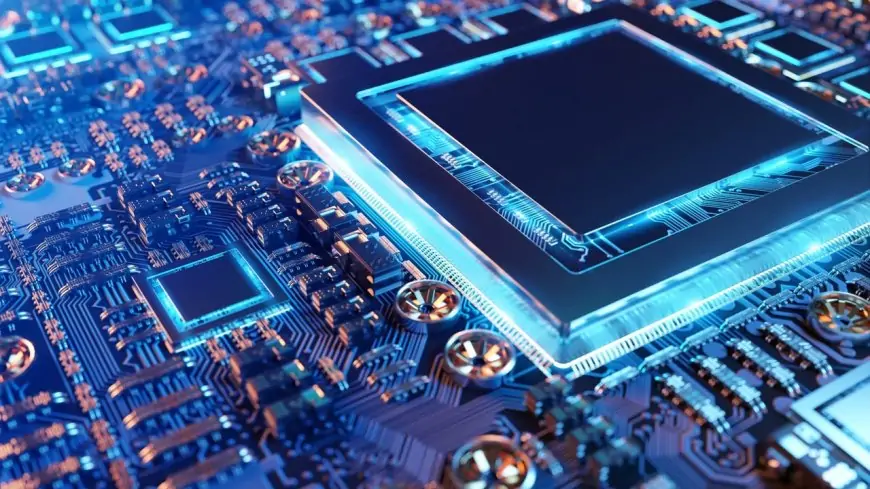
Nvidia’s long-standing dominance in the AI GPU market faces a formidable challenge from China’s latest technological breakthrough—a domestically developed AI chip leveraging 14nm logic integrated with 18nm DRAM through advanced 3D hybrid bonding. This innovative architecture, showcased at the ICC Global CEO Summit in Beijing, offers an impressive 120 teraflops of processing power with power efficiency reaching 2 teraflops per watt, rivaling or even exceeding the capabilities of Nvidia’s most powerful GPUs like the A100, Hopper, and upcoming Blackwell series.


China’s approach circumvents the limitations imposed by the lack of access to advanced extreme ultraviolet (EUV) lithography, which is central to leading-edge semiconductor miniaturization. Instead of competing with smaller process nodes, China’s strategy focuses on system-level integration through 3D stacking that physically bonds memory and logic layers. This design drastically boosts memory bandwidth and reduces latency by placing memory and computing elements in close physical proximity, addressing the critical "memory wall" bottleneck that has limited AI performance traditionally.
In contrast to the transistor scaling race, this method excels by enhancing data locality and operational efficiency, making it a compelling alternative to Nvidia's architecture. While Nvidia is also advancing 3D stacking techniques for its new Blackwell GPUs, China’s domestic foundries, notably SMIC, are gaining traction using mature 14nm processes combined with advanced packaging innovations. This tactic allows China to sidestep export restrictions and maintain competitive performance in AI computing.
However, beyond hardware, China recognizes the software ecosystem’s vital role. China is aggressively developing its AI software stack alternatives to Nvidia’s CUDA platform, which historically created a lock-in effect favoring Nvidia GPUs due to exclusive software optimization. Companies like Cambricon, Huawei, and Alibaba are building full-stack AI ecosystems with compatibility for popular frameworks like PyTorch and TensorFlow, enabling easier migration and adoption for domestic and international developers.
Although China's chip has raised questions about scalability, thermal management, and real-world benchmarks, its debut signals a structural shift in AI hardware competition. Nvidia’s GPU supremacy—once seemingly unassailable—now faces a credible contender focused on architectural innovation and software independence.
This development marks a turning point where the future of AI hardware supremacy will depend not just on transistors per square millimeter but also on intelligent chip design, package-level integration, and control of the AI software stack. Nvidia may no longer hold an uncontested position in the AI race, as China’s hybrid-bonded AI chip challenges the status quo and pushes the boundaries of what is possible beyond the constraints of semiconductor miniaturization.