





































Are Trade Tariffs Undermining the AI Revolution?
The advancement of AI could face potential threats from current trade tariffs.

As artificial intelligence continues to strive and reach advanced levels, many challenges lay in the way of constant evolution. One of them is the recent trade war caused by the tariffs introduced into corporate America and much of the world by the United States and president Donald Trump. This has made many people question the impact of the trade tariffs on AI.


Disruptive Tariffs
Spending on AI remains a strong, long-term strategic priority for tech giants and their clients. However, the resurgence of tariffs—particularly the latest wave targeting Chinese goods—risks disrupting the supply chains that underpin this multi-billion-dollar transformation.
The impact of these tariffs are growing, and will likely become more evident in the coming weeks as companies like Microsoft (NASDAQ:MSFT), Alphabet (NASDAQ:GOOGL), and Amazon (NASDAQ:AMZN) report quarterly results. Many analysts are studying the market, and will be watching for signs that trade tensions are beginning to affect their infrastructure spending, including those surrounding artificial intelligence.
China plays a huge role as a manufacturing hub for AI hardware.
“Much of the electrical infrastructure and data center equipment is manufactured outside of the U.S. In many cases this equipment is in short supply and demand is high globally,” said Pat Lynch, executive managing director at CBRE (NYSE:CBRE).
“Tariffs will likely make this more challenging, especially if foreign suppliers divert this equipment to other markets,” he concluded.
Issues With Market Performance
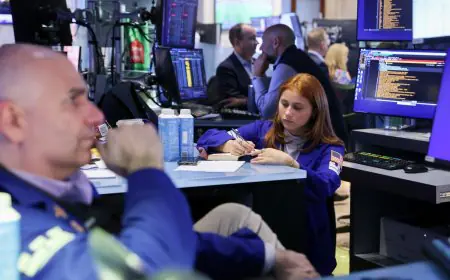
Recent market performance reflects growing investor caution. For example, The “Magnificent Seven”—which is a group of leading tech gainers, including Alphabet, Microsoft, Nvidia (NASDAQ:NVDA), and Amazon—have lost around $5 trillion in market value since peaking late last year. Nvidia, once the world’s most valuable company, is down 26% in 2025. Alphabet has lost 20%.
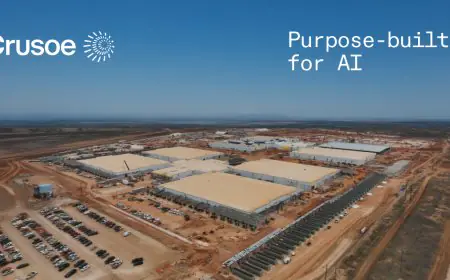
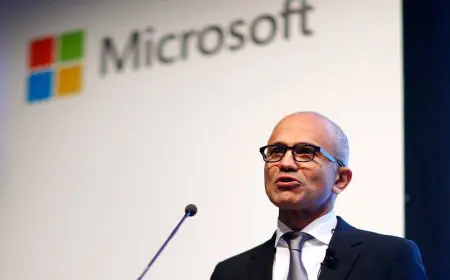
Early signs of a slowdown in infrastructure growth are beginning to emerge, with Microsoft reportedly pulling back from projects totaling 2 gigawatts of electricity capacity in the U.S. and Europe.
Furthermore, a senior Microsoft executive confirmed the company is slowing or pausing some early-stage projects to remain flexible.
“Planning is a multi-year and capital-intensive program … any significant new endeavor at this size and scale requires agility and refinement as we learn and grow with our customers,” Noelle Walsh, President at Microsoft Cloud Operations + Innovation, said in a LinkedIn post earlier this month.
Pushing Through
Despite these harsh trading conditions, some investors remain bullish. “The market has massively discounted the near-term spending for AI and it is wrong,” said Eric Schiffer, CEO of Patriarch Organization.
“The large tech players cannot afford to lose the AI race,” he emphasized, adding that hyperscalers could see more significant returns in one year to 18 months.