



































China Mandates AI Education for Primary Students to Shape Future Skills
China has announced mandatory AI education for primary and secondary students, starting in September 2025, requiring at least eight hours of instruction annually to prepare the youth for a tech-driven future.
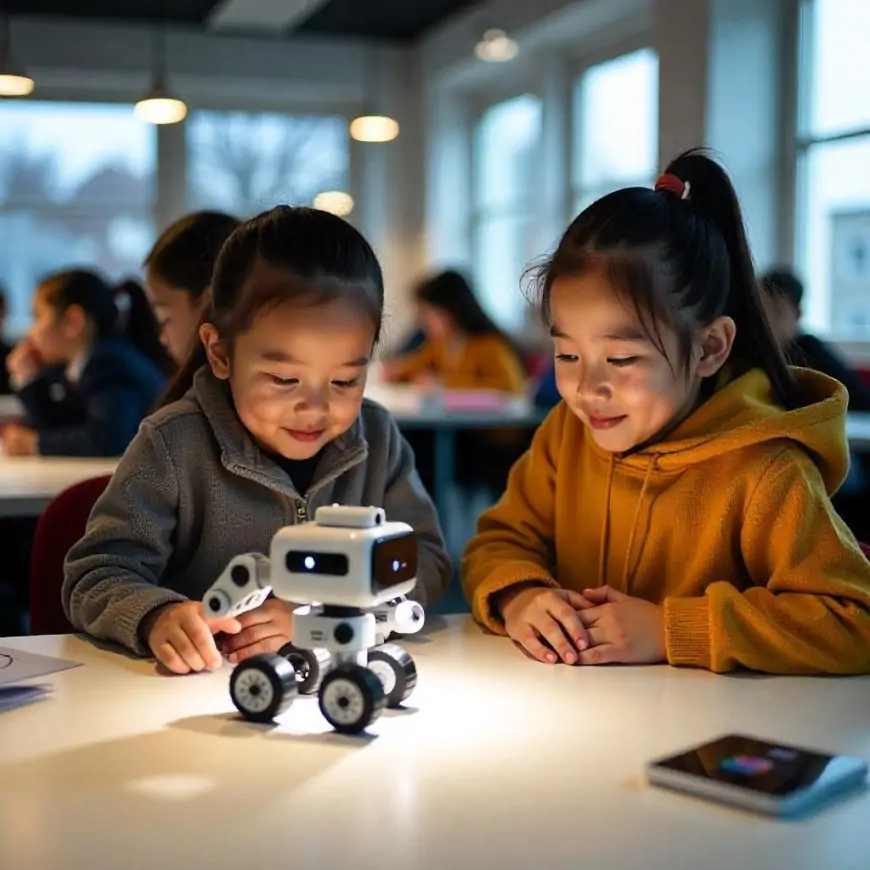
In a groundbreaking initiative aimed at enhancing its global leadership in artificial intelligence (AI), China has mandated the integration of AI education in primary and secondary schools. This policy will take effect from September 1, 2025, requiring students to complete a minimum of eight hours of AI instruction each academic year.


The directive from the Beijing Municipal Education Commission allows schools to incorporate AI lessons either as standalone courses or integrated into existing subjects like science and information technology. For younger students in elementary schools, the focus will be on engaging, hands-on activities designed to introduce foundational AI concepts. As students progress to middle school, they will delve into practical applications of AI in daily life, while high school curricula will emphasize advanced AI applications and innovation.
This educational reform aligns with China's broader ambition to cultivate a generation proficient in AI technologies. By embedding AI education early in the academic journey, the initiative aims to strengthen the nation’s innovative capabilities and ensure that its youth are equipped with essential skills for a technology-driven future.
Huai Jinpeng, China's Minister of Education, highlighted the importance of this initiative during a recent national legislative session. He stated that AI is driving a technological revolution that presents immense educational opportunities. A comprehensive white paper detailing strategic policies and methodologies for integrating AI into the education system is expected to be released in 2025.
China's move reflects a growing recognition worldwide of the importance of AI literacy in education. Countries like California have begun implementing laws to include AI education in school curricula, while Italy is experimenting with AI tools to enhance digital skills among students. By taking proactive steps towards integrating AI into early education, China positions itself strategically within the rapidly evolving global tech landscape.
While this initiative promises significant benefits, it also raises concerns regarding ethical implications and the responsible use of AI technologies among young learners. Lawmakers have called for regulations to ensure that children are educated on using generative AI tools responsibly and safely.
China's mandate for AI education marks a pivotal step towards preparing its youth for a future where technology plays an integral role across various sectors. By fostering technological literacy from an early age, China aims not only to enhance its competitive edge in the global market but also to cultivate a generation ready to navigate the complexities of an increasingly automated world.